How to Plan a Small Flower Bed: Shape, Edge and Planting
A step-by-step way to plan one small flower bed that looks intentional: where to put it, how to mark a simple shape, which edge to choose and how to arrange the plants.
Creative Gardening Ideas for Small Spaces
Plan, lay out and make the most of a small yard, patio, corner or narrow plot with clear, practical guides and ideas.
New to planning a small garden? Read these four guides in order.
The order that makes small-garden decisions easier: decide what the space is for, study what is fixed, draw a plan, choose one layout and pick plants last.
A step-by-step way to measure a small garden, catch corners that are not square, record sun and shade, and redraw it all as a simple scale plan on grid paper.
Seven layout patterns for a small plot, from diagonals and circles to two garden rooms, with the plot shape each suits, what to watch and a comparison table.
Ten visual-depth techniques for a garden that feels boxed in, each with the reason it works, from hiding a corner to placing one focal point at the far end.
Measure the plot, sketch a layout and divide the space so every square foot has a job.
A step-by-step way to plan one small flower bed that looks intentional: where to put it, how to mark a simple shape, which edge to choose and how to arrange the plants.
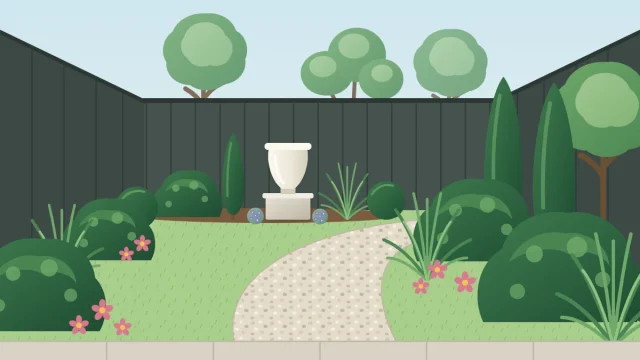
How to decide where a path belongs in a small garden, which shape makes the plot feel longer, how wide to make it and which surface suits the way you use it.
Ten visual-depth techniques for a garden that feels boxed in, each with the reason it works, from hiding a corner to placing one focal point at the far end.
Ideas for narrow side yards, tiny patios, courtyards and awkward corners.
Turn the passage between the house and the fence into a route that looks good and still works: a clear path, one slim planting strip, climbers and tidy storage.
Eight ways to turn a bare, shady or forgotten garden corner into a seat, a feature or useful storage, each matched to the light and conditions the corner really has.
Make a small paved patio green without giving up the table and chairs. These ideas put the seating first, then fit planting into the edges, corners and height.
A long, thin garden does not have to feel like a corridor. Learn how to break up the length, move the eye from side to side and give the far end a purpose.
Trellises, plant stands and climbers that move the planting up and off the ground.
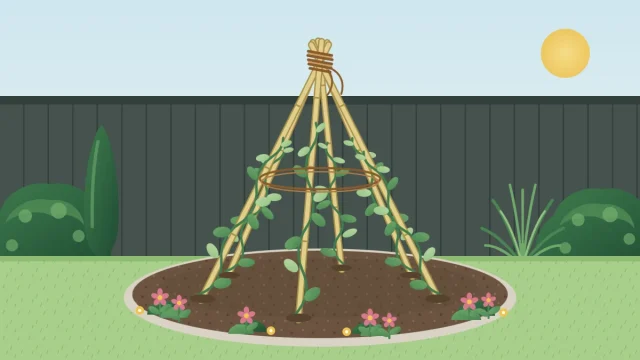
Make a simple freestanding cane teepee for annual climbers from bamboo canes and twine, with steps for spacing, tying, planting and looking after it through the season.
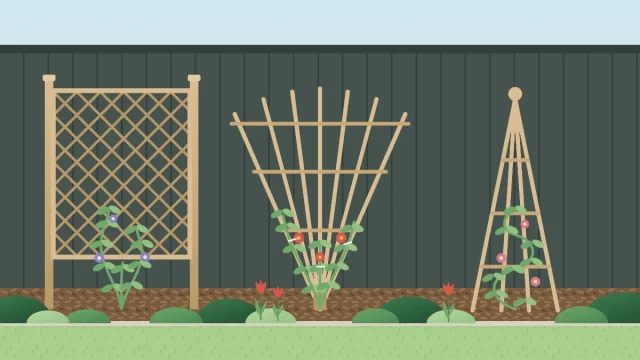
How to choose a trellis by the job it does, from flat panels and fans to obelisks and arches, and where to place it so it suits both the layout and the climber.
A design overview of ways to add planting height in a small yard, from freestanding trellis, obelisks and plant stands to arches and tall planters, with where each one fits.
Grouping, sizing and arranging containers so a paved space still feels planted.
Use planter boxes as space-shaping furniture: long low boxes to edge a patio, tall narrow ones as a green screen, an L around a corner seat, and boxes on casters you can rearrange.
A step-by-step way to compose one good-looking pot group for a corner or doorway: choose three sizes in one material, pick three plant shapes and place them as an uneven triangle.
Turn a scatter of mismatched pots into arrangements that look designed: odd-numbered groups, limited materials, one large statement pot, repeated pots along steps and pairs that frame an entrance.
Focal points, lighting, screens and finishing touches scaled for a small plot.
How to place an outdoor mirror so it reads as an opening instead of a mirror, with the cautions that matter: keep it out of direct sun, think about birds, and follow the manufacturer's instructions.
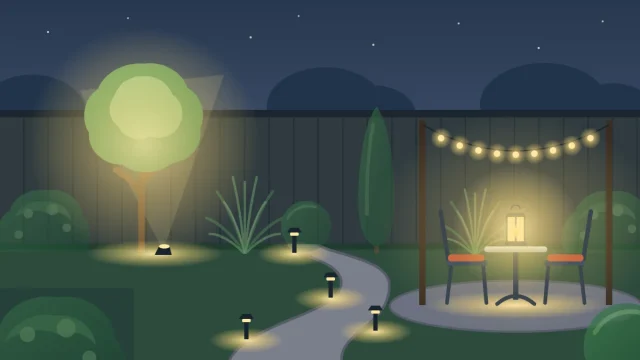
Light a small garden with a few well-placed sources instead of one floodlight: uplight a tree, graze a wall, mark the path low down and give the seat a warm glow, using solar or plug-in low-voltage kits.
Why a small garden needs one main focal point, what it can be (a large pot, a bench, a birdbath, an obelisk or a small tree) and where to place it so the whole space feels organized.
Step-by-step projects: measure, plan, build simple supports and arrange.
A step-by-step way to compose one good-looking pot group for a corner or doorway: choose three sizes in one material, pick three plant shapes and place them as an uneven triangle.
Make a simple freestanding cane teepee for annual climbers from bamboo canes and twine, with steps for spacing, tying, planting and looking after it through the season.
A step-by-step way to stack tree, climber, shrub, perennial, groundcover and bulb layers into a narrow border so it looks full instead of flat.
A simple grid method for finding the seasons when a small yard has nothing to offer, plus four rules for filling each gap without overcrowding the space.
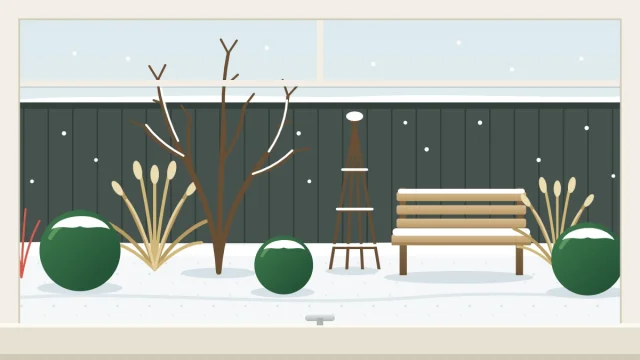
How to design a small yard for the months you see it from indoors: evergreen structure, bare-season shapes, strong hardscape and a few small additions planned from the main window.
A weekend-sized spring refresh for a small yard, in the order that works: edit, clear, edge and clean, mulch, regroup pots, check supports, then add one new idea.
Seven places a herb area fits in a small yard, from the kitchen door to a checkerboard bed, and the layout rules that keep herbs sunny, within reach and good to look at.
How to find the sight lines that matter and screen only those, using parasols, a small tree, tall planters and open screens, so a small yard feels private without feeling boxed in.
Where to keep tools, bins, the hose and cushions in a small yard so they stop taking over the view, with simple rules for placing and disguising each piece of storage.
Every guide is listed on one page, from layouts and narrow plots to vertical growing, containers, decor and seasonal ideas. All of them are free to read, with no sign-up needed.