How to Make a Small Garden Look Bigger: 10 Design Tricks
Ten visual-depth techniques for a garden that feels boxed in, each with the reason it works, from hiding a corner to placing one focal point at the far end.
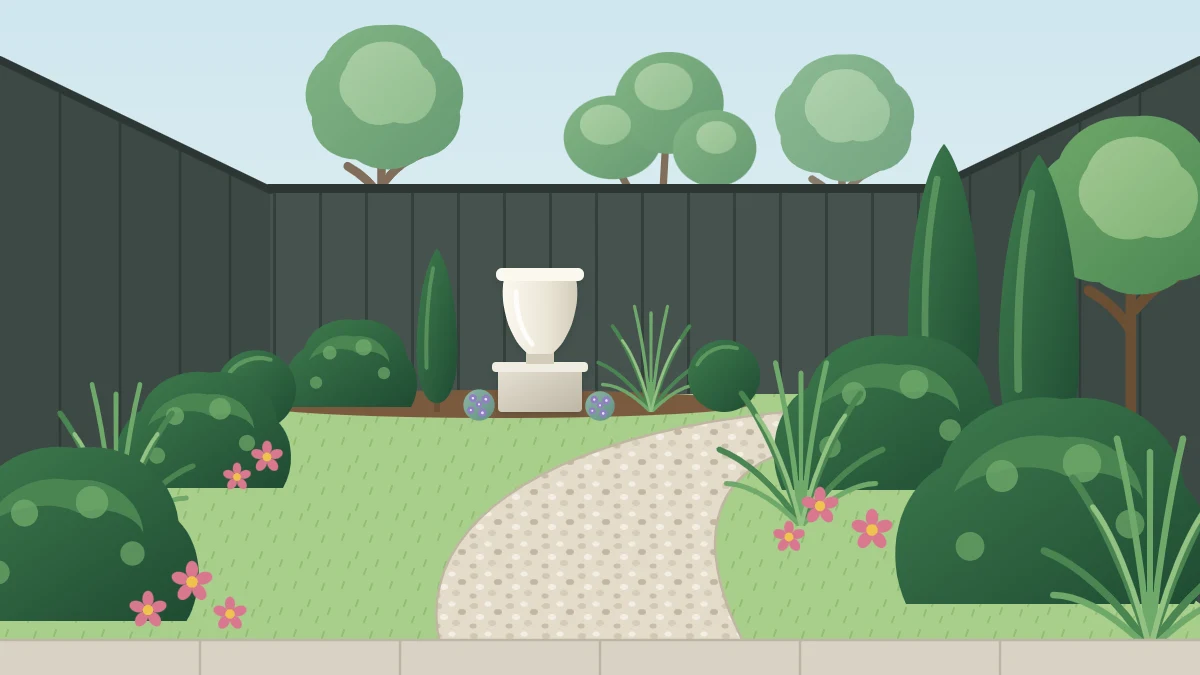
A garden feels cramped when you can see every boundary from the back door and there is nothing left to discover. The techniques that make a small garden look bigger all work on that problem: they change what the eye sees first, how far it travels and where it comes to rest.
None of them moves a fence. They change how the space feels, not its size, and it helps to be clear about that before you begin.
Stop the whole garden being seen at once
1. Hide part of the garden
When everything is visible in one glance, the mind measures the space instantly. Hide a corner behind a bed that juts out, a tall group of plants or an open screen, and the garden can no longer be measured that way. The eye assumes the space carries on.
You only need to hide a little. A bed reaching a third of the way across is enough to suggest there is more around it.
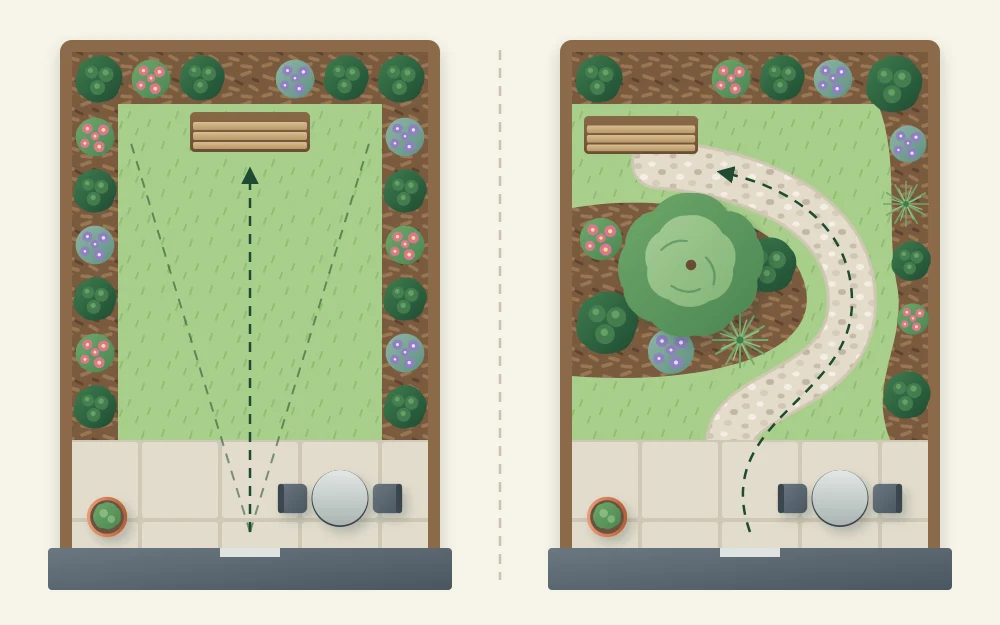
2. Lead the eye along a diagonal or a curve
A straight line from the door to the back fence is the shortest route through the garden, and the eye takes it at once. A diagonal is longer, and a gentle curve is longer still, so the look across the garden takes more time and the space reads as deeper.
The line can be a path, the edge of a lawn or the edge of the paving. The guide to small garden pathways explains which path shapes lengthen a plot and which shorten it.
Make the boundaries recede
3. Blur the edges with planting and darker colors
A bare, pale fence is a bright line that tells you exactly where the garden ends. Planting in front of it breaks that line, and climbers on a trellis soften it further. A dark fence color, such as charcoal, deep green or black-brown, recedes behind foliage and makes the leaves stand out instead of the fence.
Before painting or staining, confirm who owns the boundary, and get the owner’s agreement if it is shared or rented.
4. Borrow a view beyond the fence
A neighbor’s tree, a distant roofline or a patch of open sky can read as part of your garden if you let it. Keep the planting low at that point, or frame the view with two taller plants, and the eye runs straight past your boundary.
Where there is no view to borrow, some people create one with an outdoor-rated mirror. It needs care: keep it out of direct sun, veil it with foliage because birds can fly into reflections, and install it following the manufacturer’s instructions. The guide to garden mirror ideas covers the cautions in full.
Simplify what goes into the space
5. Repeat a few plants and materials
Each new material or plant is a separate thing to notice. Many separate things make a space feel crowded. When the same paving, the same gravel and the same handful of plants recur, the eye links them and reads the garden as one continuous space.
6. Use larger, fewer elements
It seems logical to fill a small garden with small things, but many small pots, narrow beds and little ornaments break it into fragments. One generous bed, one large pot and full-size paving units give the garden bigger pieces, and bigger pieces suggest a bigger whole.
Use foliage and open ground to suggest distance
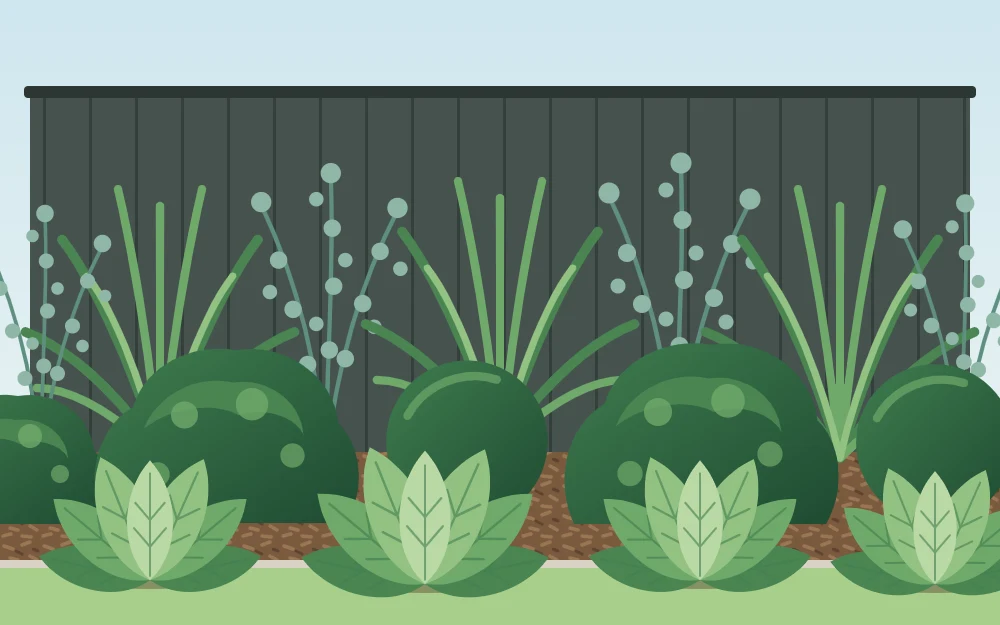
7. Put bold foliage near and fine foliage far
Detail fades with distance, so the eye reads large, clear shapes as close and fine texture as far away. Placing big, bold leaves near the house and small leaves, ferny foliage and airy grasses toward the back exaggerates that effect and stretches the apparent depth.
For how to stack heights within a border, see the guide on how to layer plants in a small garden border.
8. Keep the center open
An uninterrupted stretch of lawn, gravel or paving in the middle lets the eye cross the garden without stopping. Push planting, pots and furniture toward the edges and corners where they can. Open ground is what a small garden has least of, so the more of it shows in one piece, the larger the garden feels.
Add a level and a destination
9. Change level slightly
A flat garden is read as a single plane. A low raised bed or a single broad step creates a foreground and a background, which adds a sense of depth and of moving from one place to another. Keep the change modest and easy to see, and treat raised beds and steps as things to buy or have installed.
10. Place a focal point at the far end
Without something to aim for, the eye stops at the first thing it meets, often the patio furniture. A single strong object at the far end, such as a large pot, a bench or a small tree, pulls attention through the full length of the garden, so the whole depth is used.
One is enough. The guide to small garden focal point ideas explains where to place it and how large to go.
Tip
Judge every change from the two places you look from most, usually the back door and the main seat. A trick that works from one of them and fails from the other needs adjusting.
Where to begin
Trying all ten at once would undo the simplicity that several of them depend on. Start with the cheapest and most reversible: clear the center, remove small ornaments and gather scattered pots into one or two groups.
Next, deal with the boundaries, since they are what make a small garden feel boxed in. Then choose one way to interrupt the view and one focal point.
What these tricks can and cannot do
They cannot give you room for a bigger table or a longer lawn. If the garden is short of usable space, the answer lies in the layout and in what you ask the garden to do.
What they can do is remove the sense of being hemmed in. A garden that hides a little, leads the eye on a longer route and softens its edges feels restful to sit in, and that feeling is usually what people mean when they wish for more space.
Frequently asked questions
What color fence makes a small garden look bigger?
Dark, muted colors such as charcoal, deep green or dark brown tend to recede, especially with planting in front, so the boundary is less obvious. Pale fences show as a bright edge. Confirm who owns the fence before painting, and test a small patch first to see how it looks in your light.
Does a lawn make a small garden look bigger?
An open center helps, and a lawn is one way to get it. A single clear shape of grass, gravel or paving lets the eye cross the garden without interruption. What matters is that the open area is one simple piece, not that it is grass in particular.
Do tall plants make a small garden feel smaller?
Not when they are placed with care. A few tall plants or a small tree hide the boundary and draw the eye upward, which adds a sense of space. Problems come from tall, dense planting across the middle, or from plants that outgrow their bed, so check the mature height and spread on the label.