Garden Mirror Ideas: Using Mirrors in a Small Garden
How to place an outdoor mirror so it reads as an opening instead of a mirror, with the cautions that matter: keep it out of direct sun, think about birds, and follow the manufacturer's instructions.
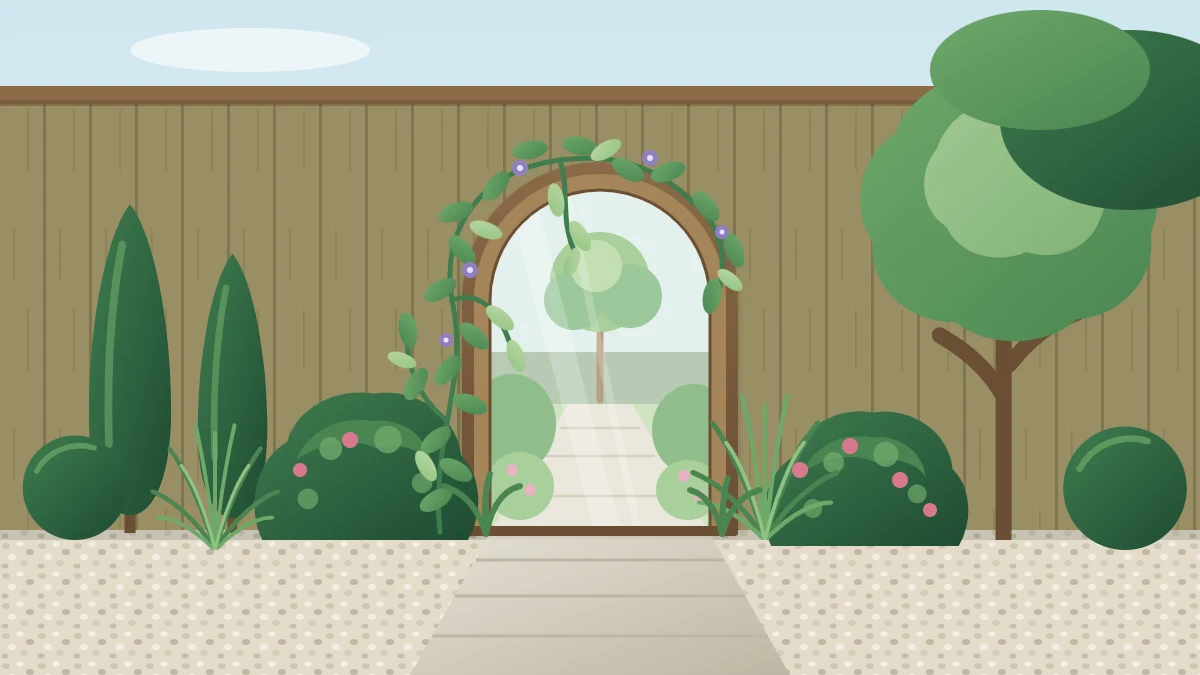
A mirror on a garden boundary can make a small space appear to continue beyond its fence. Done well, it reads as an opening into another garden. Done badly, it reads as a bathroom mirror outdoors, and it can cause real problems for plants and birds.
These garden mirror ideas give the design and the cautions equal weight. The same choices that make a mirror convincing, shade, a partial veil of foliage and a careful angle, are also the ones that reduce the risks.
How a mirror changes a small garden
A mirror does two things. It doubles what it faces, so a single bed of planting appears to have another behind it. And it bounces daylight back into the garden, which brightens a dim corner or a shaded passage.
The effect depends on the eye being fooled for a moment. If the mirror is obviously a mirror, the depth vanishes. So nearly every placement decision comes down to hiding its edges and controlling what it reflects. It is one of several techniques for making a small garden look bigger, and it works best alongside the others.
Read the cautions before you choose a spot
Three issues decide where a mirror can go, so settle them first.
Use a mirror made for outdoor use
Indoor mirrors are not made for weather. Choose one sold for outdoor use, typically acrylic or safety-backed glass. Acrylic is lighter and does not shatter in the same way, though its reflection can be slightly wavy in larger sizes.
Keep it out of direct sun
Never place any mirror where it catches direct sun. A mirror in sun throws a bright patch of reflected light and heat onto whatever is opposite, and that can scorch plants or, in dry conditions, start a fire. Curved, concave and magnifying mirrors are the most hazardous because they concentrate light, so keep them out of the garden. Check the position at several times of day and again in a different season, since the sun’s path shifts through the year.
Think about birds
Birds can fly into reflective surfaces because they see the reflected plants and sky as open space. A small, partly covered mirror is less of a hazard than a large clear one. Break up the reflection with planting or trellis, and avoid placing a mirror near feeders or birdbaths. The U.S. Fish and Wildlife Service explains the problem in its guide to bird collisions with glass.
Good to know
Have the mirror installed following the manufacturer’s instructions, and for a shared or rented boundary, get the owner’s agreement first. Check it after wind. If you find a mirror is catching sun or birds are striking it, take it down or cover it.
Place it to reflect planting, not you
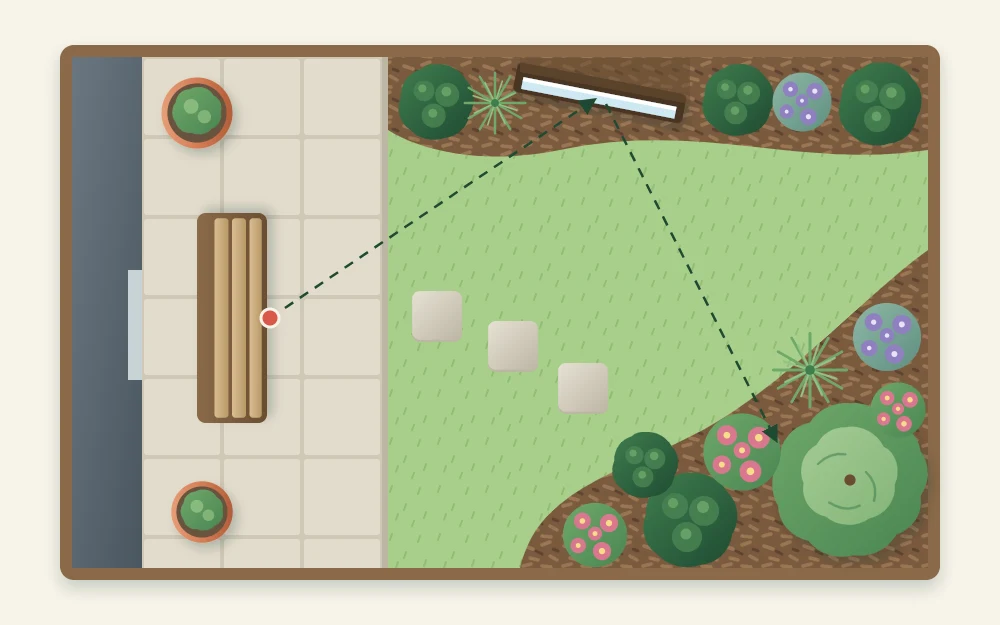
A mirror facing the main viewpoint square-on shows you, the back of the house and the patio furniture. That gives the trick away at once.
Instead, set it so that from your usual seat or the back door it reflects foliage. In practice this means putting it on a side boundary, or turning it slightly, so your sight line strikes it at an angle and bounces off toward a bed. Have someone hold the mirror in place while you sit and look, and adjust until all you see in it is green.
Frame it like a window or doorway
The eye accepts an opening where it expects one. A mirror in an arched or rectangular frame that looks like a window, a doorway or a gate suggests a way through. A frameless sheet with visible edges suggests a mirror.
- A doorway shape works when its base sits at or near ground level, with paving or gravel running up to it.
- A window shape suits a spot at about eye level on a fence or wall, with planting below.
- A weathered or painted timber frame that matches the fence helps the mirror belong to the boundary.
Size it modestly. A mirror about the size of a real window or narrow door is more believable than a very large one, and a smaller surface is easier to veil.
Veil it with foliage or trellis
Partly covering the mirror is the single most effective step. Leaves across the edges hide the frame-to-fence join, and stems across the face break the reflection into glimpses. A glimpse is more convincing than a full view, because the mind fills in the rest.
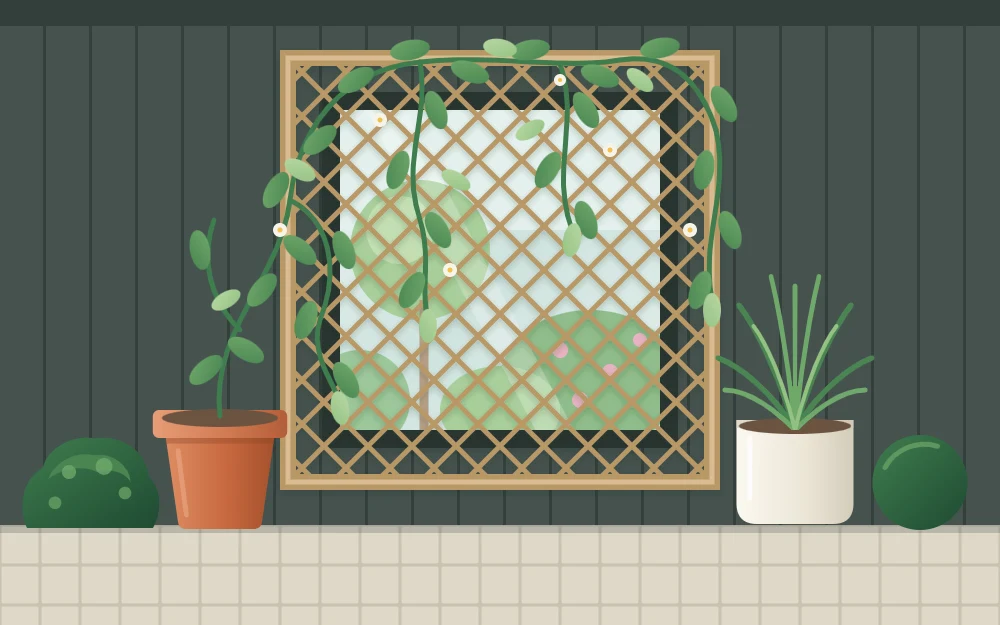
An open trellis panel placed over the mirror gives this effect from day one, and it is the same measure that makes the surface more visible to birds. A climber or a tall plant in front adds to it over time. Choose plants that suit shade and your hardiness zone, and check the mature height and spread on the label so the mirror is veiled, not buried.
Three places a mirror works
- At the end of a path. A doorway-shaped mirror where a path stops makes the path seem to continue. This false opening is the classic use, and it needs the path to run straight toward it.
- In a narrow shaded passage. A mirror on the long side reflects the planting opposite and makes the strip feel wider. Shade is common there, which helps; see these side yard garden ideas for what to plant facing it.
- Behind a feature. A mirror behind a pot or a water bowl shows the back of it and doubles its presence. Keep the mirror secondary, though: the object is the feature. For choosing one, see the guide to focal points in a small garden.
Tip
One mirror is enough. Two in the same view reflect each other or show the trick twice, and the second one undoes the first.
Alternatives that give depth without glass
If no spot is shaded enough, or birds are frequent visitors, you can suggest an opening without any reflection.
- A painted false door. An old door or a door-shaped panel, painted a strong color and set against the boundary with a pot either side, implies a way through.
- A framed trellis panel. A trellis panel in an arched frame, with a darker color painted on the fence behind it, reads as a recess.
- A dark-painted section of fence. A dark patch behind pale planting recedes, so the boundary seems farther away.
Frequently asked questions
Can a garden mirror start a fire?
It is possible. A mirror in direct sun reflects light and heat onto whatever faces it, and curved or magnifying mirrors concentrate that light, which can scorch plants or ignite dry material. Use a flat mirror made for outdoor use, place it in shade, and check it at different times of day and in different seasons.
Are garden mirrors a problem for birds?
They can be, because birds may see the reflected plants and sky as open space and fly into the surface. Keep the mirror small, cover part of it with trellis or foliage, and avoid placing it near feeders or birdbaths. If strikes still happen, cover the mirror or remove it.
Where is the best place for a mirror in a small garden?
On a shaded boundary where, from your usual seat or door, it reflects planting and not you or the house. The end of a straight path and the long side of a narrow shaded passage are the two most convincing positions. Test it by having someone hold it while you look.