Garden Corner Ideas: 8 Ways to Use an Awkward Corner
Eight ways to turn a bare, shady or forgotten garden corner into a seat, a feature or useful storage, each matched to the light and conditions the corner really has.
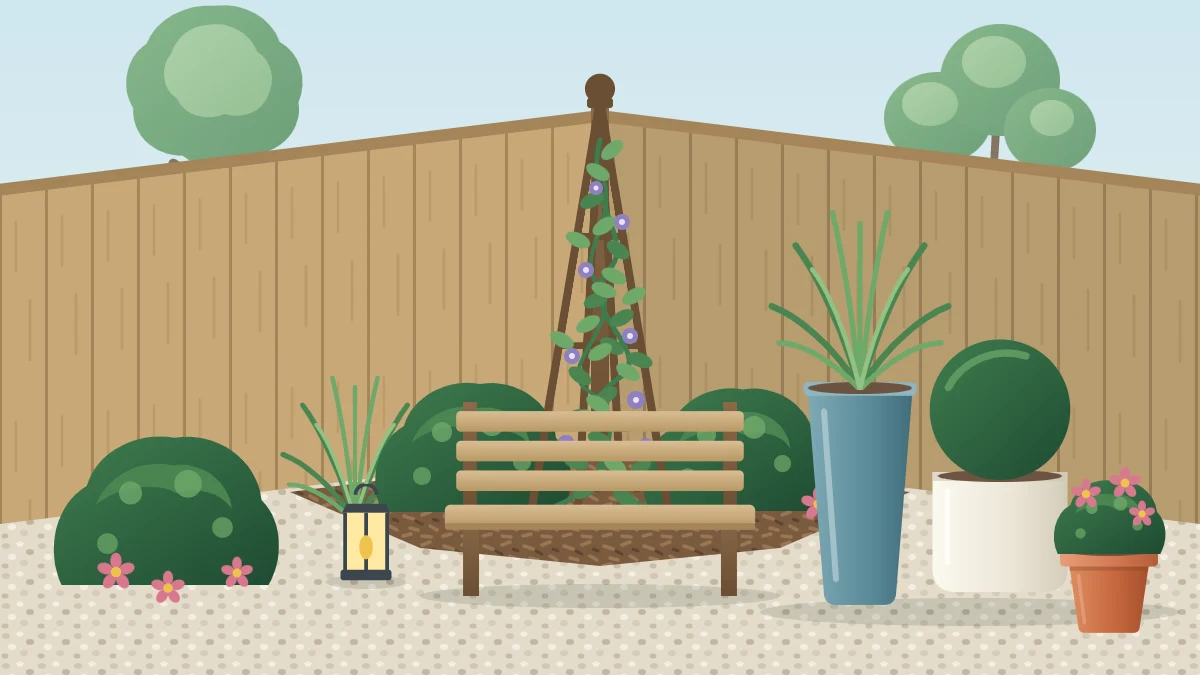
Corners are where small gardens quietly waste space. Two fences meet, the mower cannot turn, the light is poor, and the spot fills with a leaning rake and a stack of empty pots. In a small plot that can be a noticeable share of the ground.
The garden corner ideas here are matched to conditions, because a corner that bakes in the afternoon and one that never sees the sun need different answers. Read the corner first, then choose the use that fits it.
Read the corner before you choose
Three quick checks will narrow the choice for you.
- Light. Look at the corner in the morning, at midday and in the late afternoon. Note whether it gets several hours of sun, a short spell, or none.
- Moisture. Corners under a roof overhang or a neighbor’s tree are often dry. Corners at the low end of the yard can stay damp. Push a trowel into the soil a day after rain to find out.
- The view from the house. Stand at the door and at the main window. A corner in full view should hold something worth looking at. A corner you cannot see is the place for things you would prefer to hide.
If you want more background on matching plants to a spot, see Clemson Cooperative Extension for more detail on site conditions.
Eight ways to use a corner

1. A corner seat with planting behind
Two boundaries at your back make a corner feel sheltered, which is why a seat there tends to get used. A corner bench or a single chair set at an angle looks out across the longest view the garden has. Put tall planting behind it so you are sitting in the garden and not against a bare fence. Best for a corner that catches sun at the time of day you sit outside.
2. A tiered group of pots
Where the corner is paved or the soil is poor, a group of pots at different heights fills it without any digging. The two fences act as a backdrop, so the group looks deliberate. Use one pot material and step the heights down toward the front. The tutorial on composing a three-pot arrangement walks through the placing.
3. A small tree or tall shrub
A corner is often the one place in a small garden where a tree can go, because its canopy can spread in two directions over ground nobody uses. The height also rounds off the hard right angle where the fences meet. Check the mature height and spread on the label, check that it suits your hardiness zone, and ask a local nursery about planting near boundaries and buildings.
4. A corner raised bed
A quarter-circle or triangular raised bed lifts planting closer to eye level and gives the corner a firm, finished edge. Buy one as a kit or have it built. It suits a sunny corner where you want flowers within reach.
5. A water bowl or birdbath with low planting
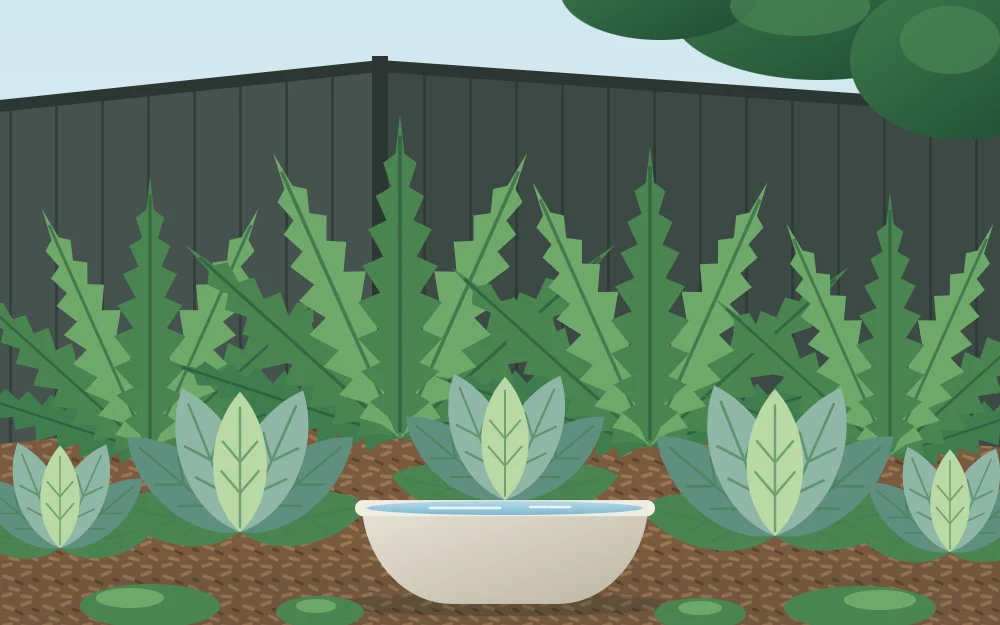
A shallow bowl of water brings reflected light into a dull corner and gives the eye a place to rest. Surround it with low foliage so it sits among plants and does not stand alone on bare ground. Keep it shallow, and if small children use the garden, think carefully about whether open water belongs there at all.
6. A storage or compost nook behind a screen
The corner you see least from the house is the natural home for a compost bin, spare pots and tools. A freestanding slatted or trellis screen set across the corner on the diagonal hides the contents and leaves a gap to step behind. There are more ways to tuck things away in these storage ideas for a small garden.
7. A climber on an obelisk
An obelisk stands on the ground or in a bed, so it gives height without attaching anything to the fence. It turns a flat corner into a vertical accent that draws the eye upward. Choose a climber for the light the corner gets, check local lists so you avoid any vine that is invasive in your area, and check the obelisk after wind.
8. A foliage planting for a dark corner
A corner with no direct sun will not grow many flowers, but it can be the most restful part of the garden. Layer green shapes instead: tall ferns at the back, broad leaves in the middle and a low groundcover at the front. Ferns and hostas are widely grown examples of the feathery and bold leaf shapes that work together. Check that any plant suits your hardiness zone, and check whether it is a concern for pets or children before buying it.
Match the idea to the conditions
| Corner condition | Ideas that fit | Why |
|---|---|---|
| Sunny, seen from the house | Seat, raised bed, obelisk | Good light for flowers and for sitting |
| Shady, seen from the house | Foliage planting, water bowl | Leaf shape and reflection suit low light |
| Paved or poor soil | Group of pots | Needs no bed |
| Hidden from view | Storage or compost nook | Keeps clutter out of the main view |
Curve or cut off the corner
A sharp right angle tells the eye exactly where the garden stops. Soften it and the boundary becomes harder to read, which makes the plot feel a little larger.
There are two simple ways to do this. Sweep the edge of the lawn or paving around in a curve, so the corner becomes a deep, rounded bed. Or run a straight edge across it on the diagonal, which leaves a planted triangle. Either way the deepest planting in the garden ends up where the fences meet, hiding the join.
Good to know
If you plan to dig a new bed or a tree hole in a corner, call 811 a few days beforehand to have buried utilities marked. Lines often run along boundaries.
Give one corner the starring role
It is tempting to treat every corner as a feature. In a small garden that leaves four things competing for attention. Pick the corner you see best from the house and make that the one that stands out, then keep the others quiet with simple planting or storage. The guide to choosing a focal point for a small garden explains how to place and scale it.
Tip
Paint or stain the two fence panels behind a feature corner a darker shade. A dark background recedes, so the plants or pots in front of it stand out more clearly.
Leave a way in
Whatever you choose, leave a way to reach the fence behind for upkeep, and confirm who owns the boundary before you plant against it.
Frequently asked questions
What can I put in a shady garden corner?
Lean on foliage and reflection instead of flowers. Layered leaf shapes such as ferns behind broad-leaved plants, a pale pot or a shallow water bowl all show up well in low light. A shady corner that is hidden from the house is also a sensible place for a screened compost or storage area.
How do I fill an empty corner without digging?
Use things that stand on the ground. A group of three to five pots in one material at stepped heights fills a paved or poor-soil corner well. An obelisk in a large planter, a corner bench or a freestanding screen with a planter in front are other options that need no new bed.
Should every corner of a small garden have a feature?
No. Several features in a small space compete with each other and make it look busy. Choose the corner you see most clearly from the house for the main feature, then keep the remaining corners calm with simple planting, a single shrub or tucked-away storage.


