Small Garden Design: A Simple Plan for Any Small Space
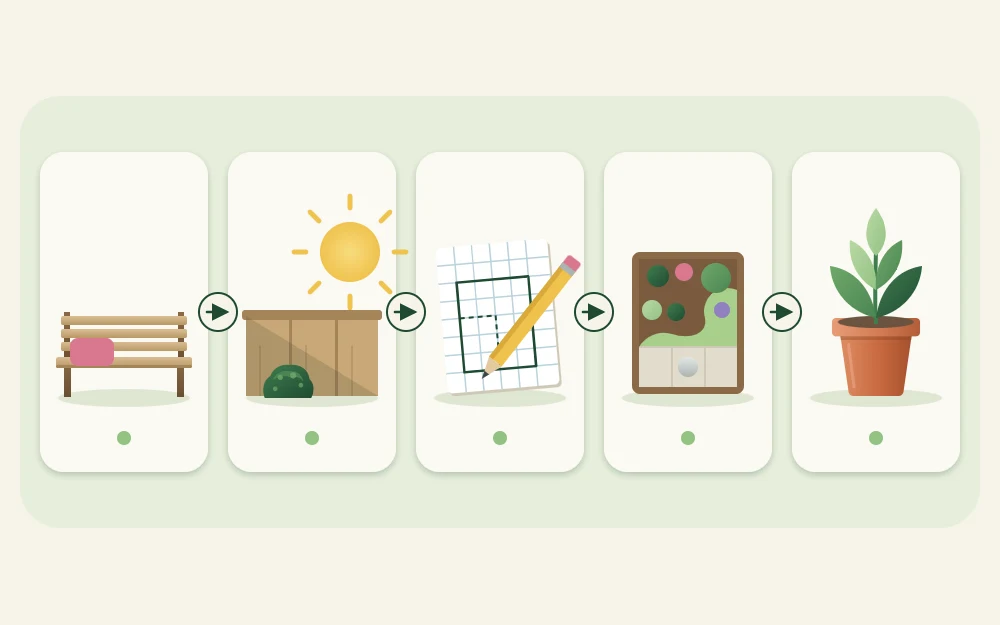
The order that makes small-garden decisions easier: decide what the space is for, study what is fixed, draw a plan, choose one layout and pick plants last.
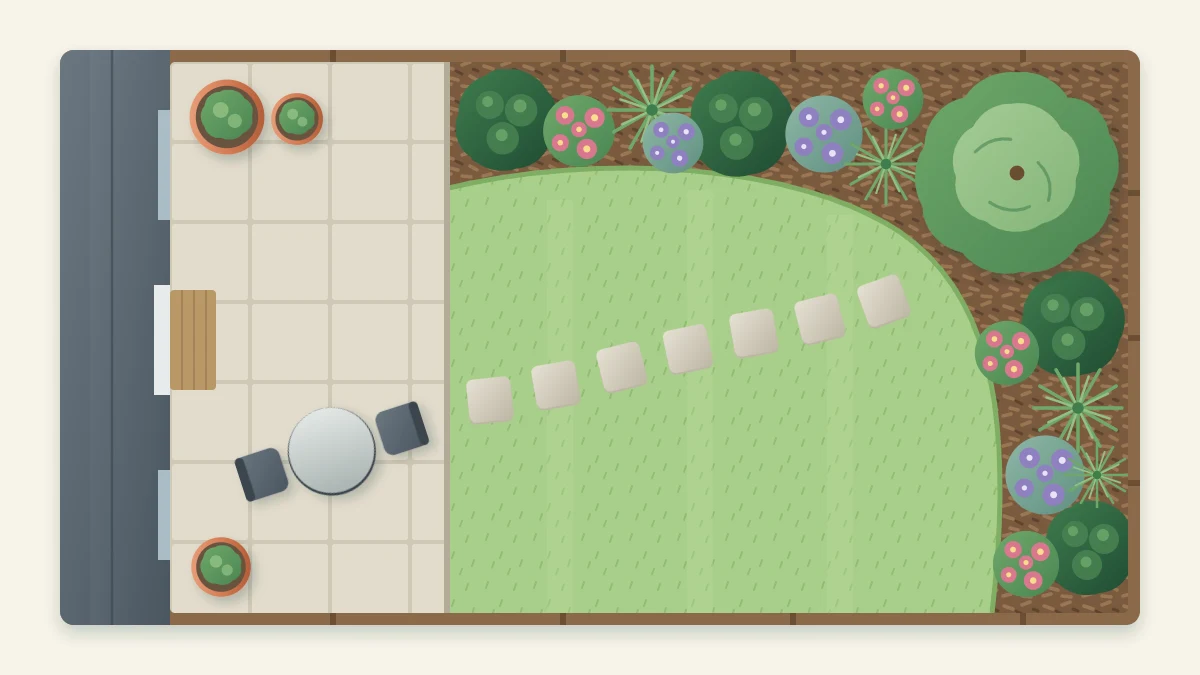
Good small garden design is less about clever products and more about making decisions in a sensible order. A small yard, courtyard or patio garden has no spare room to absorb a mistake, so a seat in the wrong place or a shrub that grows too wide is felt every single day.
The encouraging part is that a small space is quick to understand. You can stand in one spot and see all of it, and you can plan it on a single sheet of paper. This guide sets out the order to work in and the reason behind each step, and it points to the detailed guides when you are ready for them.
Why the order of decisions matters
Most people begin at the garden center, because plants are the enjoyable part. The trouble is that plants bought first end up deciding the layout: the bed goes wherever the new shrub happens to fit, and the seat gets whatever ground is left.
Working the other way, from use to conditions to plan to layout to planting, means each decision narrows the next one. By the time you choose plants you already know how many you need, how tall they should be and how much sun they will get. That is easier, and it wastes less money and less space.
Start with what the space is for
Write down what you want to do in the garden, in plain verbs. Most lists come down to four kinds of use:
- Sit: a chair for coffee or a table for meals, and for how many people.
- Grow: flowers to look at, herbs to pick or a few vegetables.
- Play: open ground for children or a dog, or simply room to stretch out.
- Store: bins, tools, a hose, cushions, a bicycle.
Then rank them. A small garden can usually do two things well, or three with some compromise, so the ranking tells you which use gets the best spot and which gets a corner. Being honest here saves more space than any later step, because the usual cause of a cramped garden is trying to fit everything in at equal size.
Look at what is fixed
Next, study the things you cannot change, or would not want to pay to change. They set the limits your plan has to work within.
- Sun and shade: check in the morning, around midday and in late afternoon. The pattern shifts through the year, so note the season as well.
- Doors and windows: where you step out, and what you see from indoors, which is how the garden is viewed most often.
- Views: anything beyond the boundary worth keeping in sight, and anything you would rather screen.
- Boundaries: fences, walls and hedges, their condition, and who owns each one.
- Drains and services: drain covers, taps, meters and utility covers, all of which need to stay reachable.
Conditions matter more in a small plot because there is rarely a second choice of position. If only one corner gets evening sun, that fact decides where the seat goes before any design idea does.
Draw a simple plan
A plan is an outline of the garden drawn to scale, with the fixed things marked on it. It does not need to be neat. Its job is to let you test ideas with a pencil instead of a spade, and to show whether a table, a path and a bed really fit together.
It takes an hour or two with a tape measure and grid paper. The method is set out step by step in the guide on how to measure a small garden and draw a plan.
Choose one layout idea
With the plan drawn, decide on a single organizing idea for the ground: paving and beds turned on the diagonal, a circle in the center, a path with planting on both sides, or an open middle with planting around the edge. One clear shape makes a small garden read as designed. Several competing shapes make it look like leftovers.
Sketch two or three options on copies of your plan before settling. The guide to small garden layout ideas compares seven patterns and the plot shapes each one suits.
Tip
Lay a hose or a length of string on the ground in the shape you have drawn and live with it for a few days. Walking around a shape tells you things the paper cannot.
Leave plants and details until last
Only now choose plants, pots, furniture and lighting. You know the size of each bed and how much light it gets, so you can shop for a plant that fills a specific role instead of falling for whatever is in flower that week.
Check the mature height and spread on every label, and check that each plant suits your hardiness zone. The guide to choosing the best plants for small gardens gives a method for narrowing the choice. For more detail on the general principles of planning a home landscape, see University of Florida IFAS Extension.
Why restraint works in a small space
In a small garden everything is seen together, so every extra material, color and ornament competes for attention at close range. Holding back is what makes the space feel calm, and calmer spaces feel larger.
- Fewer materials: one paving surface, one gravel and one edging look intentional. Each change of hardscape draws a line, and lines cut a small space into smaller pieces.
- Repeated plants: five kinds of plant used several times each tie the garden together. Twenty single plants make it look busy.
- One focal point: a single pot, bench or small tree gives the eye somewhere to rest. Several fight each other, and none wins.
The same thinking sits behind most of the visual techniques for making a small garden look bigger, which is a natural next read once your layout is settled.
A realistic way to begin
You do not have to redo the whole garden at once. Spend one weekend on the list of uses and on watching the sun, and another on the plan. Then make changes in stages, starting with the hardscape and the largest plants, because they are the hardest to move later.
Smaller details such as pots, cushions and lights can wait, and they are easier to choose once the main shapes are in place. A small garden rewards this patience: each stage is small enough to finish, and each one makes the next decision clearer.
Frequently asked questions
Where do I start when designing a small garden?
Start with a written list of what you want to do in the space, then rank it. After that, watch where the sun falls through the day and note the doors, views and boundaries. Only then draw a plan and choose a layout. Plants come last, once you know the size and light of each bed.
Do I need a scale drawing for a very small garden?
A simple scale drawing helps even in a tiny space, because it shows whether furniture, a route and planting fit together before you spend anything. It can be a pencil outline on grid paper with the door, drains and sunny areas marked. Accuracy matters far more than neatness.
How many different plants should a small garden have?
There is no fixed number, but a short palette usually looks better than a long one. Choosing roughly five to eight kinds of plant and repeating each several times ties the space together. Many single plants of different kinds tend to make a small garden look busy and smaller.