How to Measure a Small Garden and Draw a Simple Plan
A step-by-step way to measure a small garden, catch corners that are not square, record sun and shade, and redraw it all as a simple scale plan on grid paper.
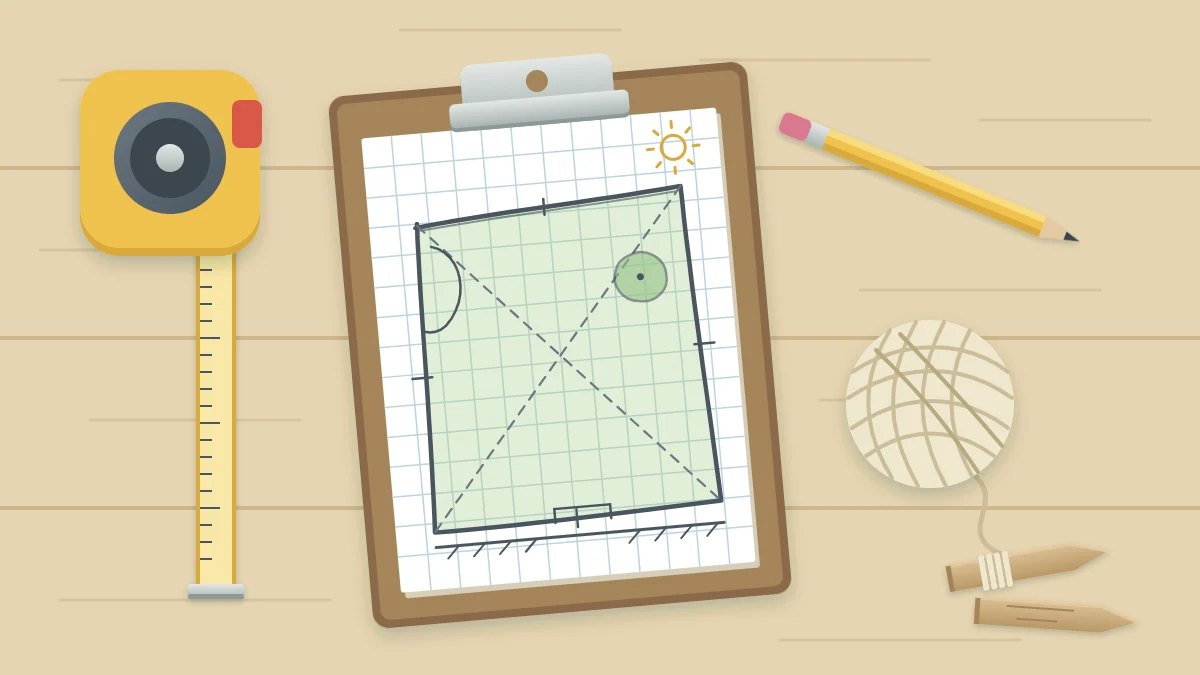
Project at a glance
What you need
- Long tape measure
- Clipboard and plain paper
- Grid paper
- Pencil and eraser
- String and two pegs
Every design decision gets easier when you have an accurate drawing in front of you. Learning how to measure a small garden takes an hour or two, and it replaces guesswork with numbers: you will know whether a table fits, how long a border really is and where the sun actually lands.
You do not need drawing skills. A clear sketch with correct measurements beats a beautiful drawing with wrong ones, and the method below is the same whether your space is a yard, a courtyard or a patio garden.
What you need
- A tape measure, ideally a long one of about 25 ft (roughly 7.5 m) or more, so you can measure each side in one go
- A clipboard with plain paper for the rough sketch
- Grid paper, a pencil and an eraser for the scale plan
- String and two pegs for holding a straight line across open ground
- A helper to hold the other end of the tape, if one is available
The steps in order
- Sketch the boundary. Stand where you can see the whole garden and draw its outline large on the clipboard, with the house along one edge. Proportions do not matter yet. Leave room to write.
- Measure each side. Run the tape along each boundary and along the house wall, and write each figure beside its line. Keep the tape straight and level; where plants are in the way, stretch string between two pegs and measure along that.
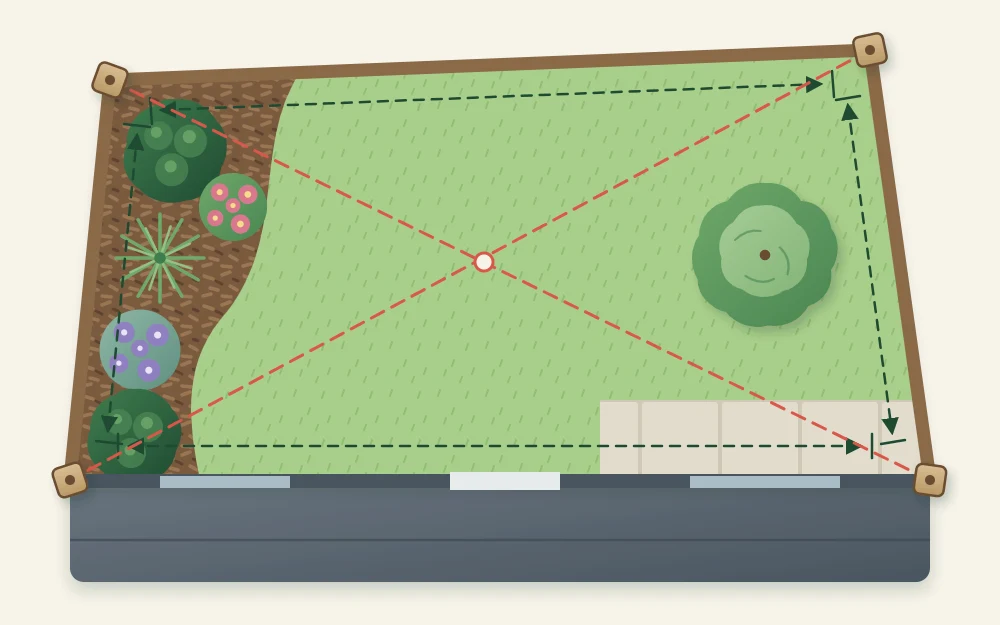
- Measure both diagonals. Measure from each corner to the opposite corner. This is what reveals corners that are not square.
- Mark the fixed things. Add doors, windows, steps, taps, drains, existing trees and utility covers, each with its measured position.
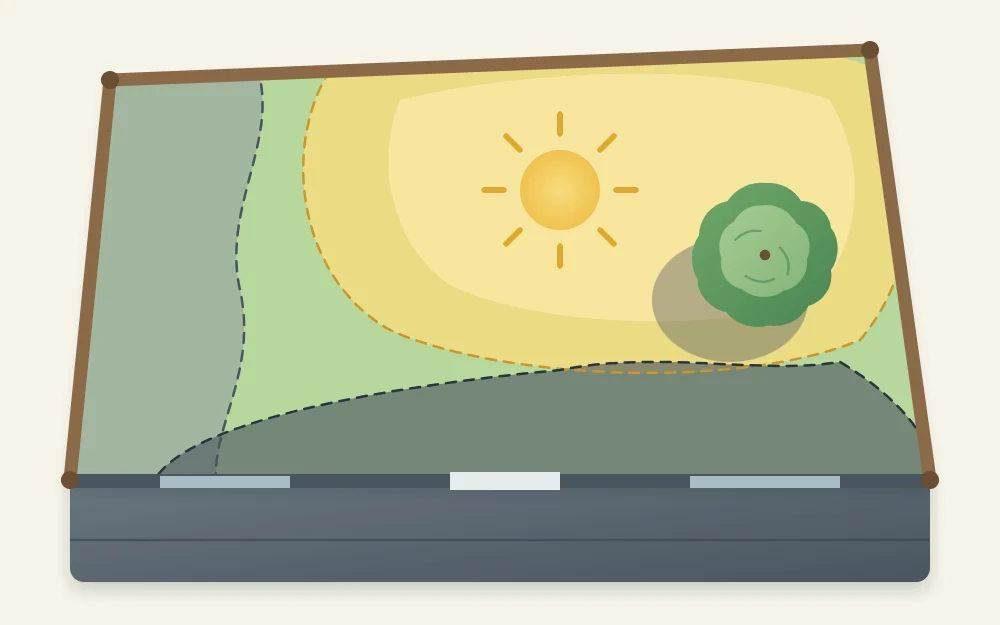
- Note sun and shade. Mark where shade falls in the morning, around midday and in late afternoon.
- Note the views. Draw arrows for views you want to keep and views you would rather hide.
- Redraw to scale. Copy everything onto grid paper at a fixed scale, then make several copies to sketch ideas on.
Why the diagonals matter
Very few gardens are true rectangles. A fence may run a little off line, or the plot may narrow toward the back. Four side lengths alone cannot show this, because a four-sided shape can lean like a folding frame without any side changing length.
The diagonals lock the shape. If opposite sides match and the two diagonals are the same length, the corners are square. If one diagonal is longer, the plot leans, and your drawing should lean with it. Finding that out on paper is far better than finding it out when paving or a planter box does not sit parallel to the fence.
Placing the fixed features
A feature needs two measurements to be placed correctly. For anything on a boundary or on the house wall, such as a door, a window or a tap, measure along that wall from the nearest corner to each edge of the feature.
For things in open ground, such as a tree, a drain or a utility cover, measure to the feature from two different corners. Those two distances cross at only one point on the plan, so the position is fixed. For a tree, also note roughly how wide the canopy spreads, because that is the area of shade and dry ground you will be designing around.
Mark which way doors open and how far, and where the steps begin and end. These small details decide where furniture and pots can stand without blocking the route.
Recording sun and shade
Light decides more in a small garden than any other single thing: where you will want to sit, where plants will grow well and where storage can go without wasting good ground. Check three times on a clear day and lightly shade the areas that are out of the sun each time.
Write the date on the sketch. Shadows are longer in winter and shorter in summer, so a spot that is sunny in June may be shaded for months at the other end of the year. If you can, repeat the check in another season and add it in a different pencil shade.
Tip
Add an arrow pointing north. It lets you predict light in seasons you have not yet observed, and plant labels and garden guides often describe positions by the direction they face.
Drawing the plan to scale
Choose a scale that lets the whole garden fit on one sheet. One square per foot (about 30 cm) works for most small plots; if yours is longer than the page, let one square stand for 2 ft (about 60 cm) instead. Write the scale on the sheet so you do not have to remember it.
Draw the house wall first, since it is usually the straightest line you have. Then count squares for each side. If the diagonals showed the plot is not square, find each far corner from two measurements: mark the side length and the diagonal length on the edge of a strip of paper, using the grid as a ruler, and swing each from its own starting corner until the two marks meet.
Add the fixed features and the shade areas, then go over the final lines firmly. Keep this sheet as the original and never draw ideas on it.
Putting the plan to work
Make several photocopies, or lay tracing paper over the original. Each copy is a place to try something without committing to it, which is where the plan repays the time spent measuring.
If you are still deciding what the garden is for, the overview of small garden design basics explains the order to work in. If you already know, start by sketching bubbles for each use, as described in the guide on dividing a small garden into zones, and then try a few of the layout patterns for small plots on separate copies to see which one fits your shape.
Keep the measured sketch as well. It holds the raw figures, and you will want them again when you buy paving, edging or furniture.
Frequently asked questions
What scale should I use for a small garden plan?
One grid square per foot suits most small gardens and keeps the arithmetic simple, because you just count squares. If the garden will not fit on the sheet at that scale, let one square stand for two feet. Write the scale on the plan so every later sketch uses the same one.
Can I measure a garden on my own?
Yes. Hook the end of the tape over a peg pushed into the ground, or pin it under a brick, and walk the tape out to the far point. A helper makes the diagonals quicker and keeps the tape straighter, but careful solo measuring gives a plan that is accurate enough to design from.
How accurate does a garden plan need to be?
Aim to be within an inch or two on the main dimensions. That is close enough to check whether furniture, paths and beds fit. Positions of doors, drains and utility covers deserve the most care, because the layout has to work around them. Neat drawing matters much less than correct numbers.