Small Garden in Winter: Structure, Evergreens and Interest
How to design a small yard for the months you see it from indoors: evergreen structure, bare-season shapes, strong hardscape and a few small additions planned from the main window.
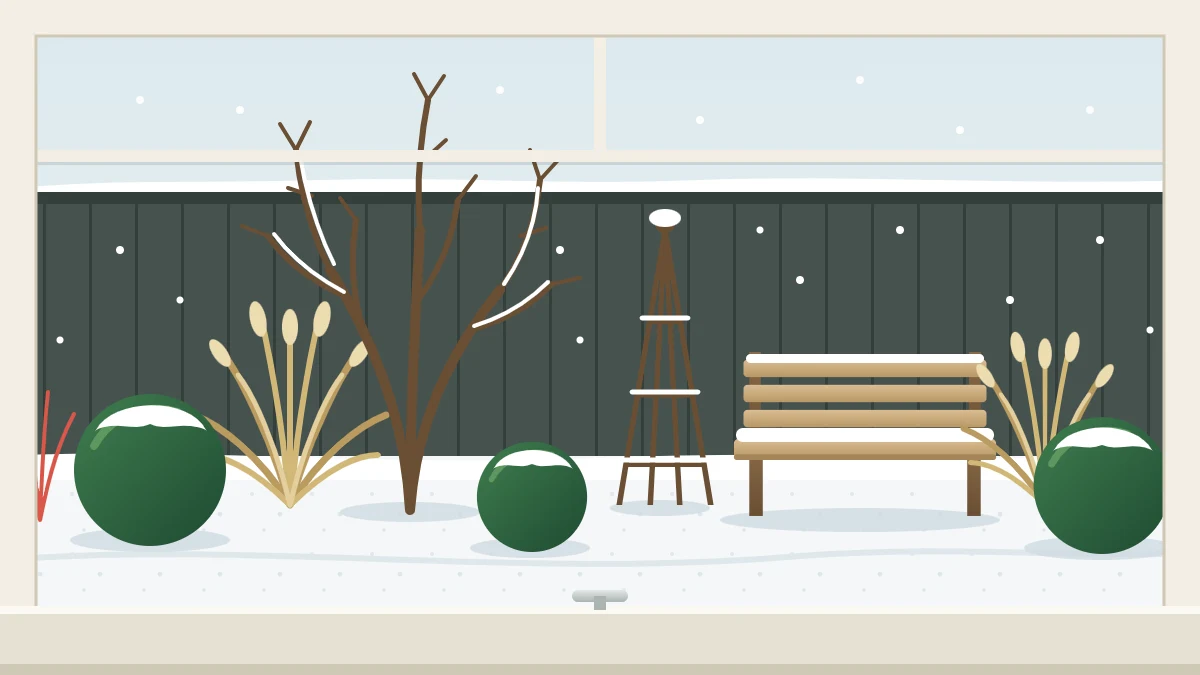
For several months of the year you look at the garden far more than you sit in it. A small garden in winter is seen mainly through a window, and it is seen every day: over the sink, from the sofa, on the way out of the door.
That makes winter worth designing for. Flowers will not carry the season. Shape, line and a few well-placed details do, and whatever looks good in January tends to improve the garden in every other month too. This is a guide to those design choices, not to protecting plants from cold.
Start from the window
Choose the window you look out of most and treat the view from it as a picture with a frame. Stand there on a dull day and ask three questions. What is the first thing your eye lands on? Is there anything green? Is there anything in the far half of the garden, or does the view stop at the patio?
Designing from indoors matters because the angle is different. You are often looking from higher up and through a fixed opening, so shapes on the ground, such as the outline of a bed or the curve of a path, show more clearly than they do when you are standing among them.
Structure first: the plants that stay
Structure plants are the evergreen shapes and woody outlines that hold the design when everything else has died back. In a small garden a handful is enough, provided they are placed where the window frames them.
- Evergreen shapes. Rounded or mounded evergreens, such as boxwood or dwarf conifers, give solid green forms that read clearly from a distance. Repeating one shape three times along a border ties the whole view together.
- Clipped forms. A clipped ball, cone or low hedge brings a crisp outline that contrasts with the loose, faded stems around it. Frost and light snow sit on clipped shapes and outline them.
- A small tree with a good winter outline. A multi-stem tree, or one with peeling, pale or colored bark, becomes a piece of sculpture once the leaves fall. See the guide to small trees for small gardens for what to check before choosing one.
- Grasses and seed heads left standing. Ornamental grasses fade to tan and keep their shape for months. Leaving them, along with the sturdier seed heads of perennials, until late winter gives height and movement for no extra work or space.
Named plants here are only examples of a role. Check that anything you choose suits your hardiness zone on the USDA Plant Hardiness Zone Map, and read the mature height and spread on the label.
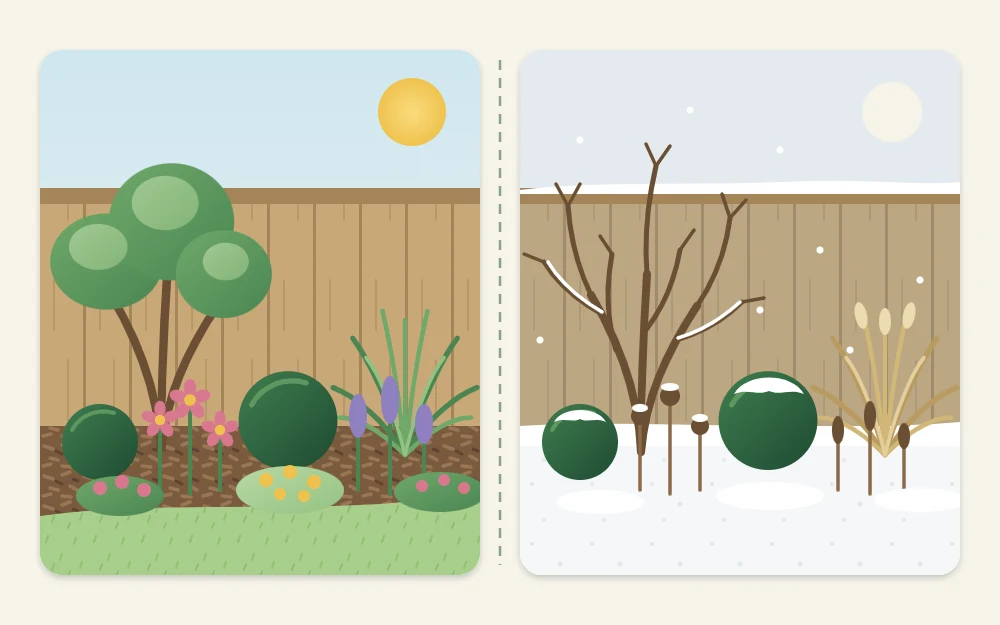
Bare-season sculpture: trellis and obelisks
Supports that are hidden under climbers in summer are fully on show in winter. An obelisk in a bed, a trellis panel or an arch gives a vertical line and a pattern at a time when little else stands above knee height.
This is a reason to choose supports you like the look of when bare, and to keep them to one style and color. It is also the easiest time to see whether they stand straight. Check freestanding supports after wind, and for anything attached to a wall or fence, follow the manufacturer’s instructions.
Let the hardscape carry the season
With the planting low, the bones of the layout show. A garden with a clear ground pattern looks deliberate in winter. One without it looks abandoned.
- Paths and edges. A defined path and a clean bed edge draw lines through the view. A neat edge on an otherwise empty bed is what makes it read as resting rather than neglected.
- Pots. Good pots look handsome empty or planted. Group the best ones and store the rest out of sight.
- A bench. A bench left out gives the view a destination and suggests the garden is still in use, even when nobody sits on it.
- A focal point. A large urn, a birdbath or a simple sculpture at the end of the main sight line gives the eye a place to rest. In winter it has no competition, so one is enough.
Small additions that earn their place
Once structure is in place, a few seasonal extras add interest without taking much room.
Winter flowers, berries and stems
Some shrubs and perennials flower in the cold months, hold berries or have brightly colored bare stems. Witch hazel, hellebores, winterberry holly and red-twig dogwood are widely grown examples where they suit the zone. One, placed close to the window or the path, does more than three at the far fence. Before buying a berrying plant, check whether it is a concern for pets or children, and check your local invasive plant lists.
Evergreen pots by the door
A pair of matching pots with evergreen plants beside the door is the winter planting you pass most often. Matching pots frame the entrance and look intentional. Mixed ones look left over.
Lighting for long evenings
Darkness comes early in winter, and an unlit garden turns the window into a black mirror. A soft light under the bare tree and a warm glow near the bench give the view depth after dusk. Use solar or plug-in low-voltage kits made for outdoor use. Anything wired into the household supply is a job for a licensed electrician. The guide to small garden lighting ideas explains what to light and what to leave dark.
A simple winter audit
Winter is the best time to plan, because the gaps are obvious. From your main window, note:
- Where the view has nothing green, and whether one evergreen shape would fix it.
- Whether anything stands above waist height in the far half of the garden.
- Which lines are blurred: a bed edge, a path or a row of pots.
- What you would rather not see, such as bins, stored furniture or an empty fence panel.
Then choose one or two changes for the coming year rather than a long list. Planting is usually done in spring or fall, so use the cold months to decide and to buy hard items such as pots and supports.
Winter as one season of four
A garden built only for winter would be all evergreens and stone, which is dull in June. The aim is a framework that holds through the bare months, with seasonal planting layered through it. To balance the whole calendar, use the season-by-season method in the guide to year-round interest in a small garden.
Frequently asked questions
How do I make a small garden look good in winter?
Plan it from the window you use most. Add a few evergreen shapes, keep one small tree or support for height, leave grasses and seed heads standing, and tidy the paths, edges and pots. With the planting low, clear lines and a single focal point do most of the work.
How many evergreens does a small garden need?
There is no fixed number. A useful starting point is to have something green in each part of the view from your main window, often three to five shapes in a small plot. Repeating one kind looks calmer than several different ones. Check each plant's mature spread on the label first.
Should I cut back grasses and perennials before winter?
From a design point of view, many are worth leaving. Ornamental grasses and firm seed heads keep their shape for months and add height and movement to an otherwise flat view. Cut them down in late winter, before new growth starts, and remove anything that has collapsed sooner.

