Small Garden Ideas for Spring: A Simple Refresh Plan
A weekend-sized spring refresh for a small yard, in the order that works: edit, clear, edge and clean, mulch, regroup pots, check supports, then add one new idea.
At the end of winter a small garden shows everything at once: flattened stems, green film on the paving, blurred bed edges and pots left where they stood in October. The good news is that a small space responds quickly, and a weekend of work in the right order changes how it looks.
The small garden ideas for spring below are arranged as a refresh plan. Each step makes the next one easier, and most of it is editing and tidying rather than buying. New plants come near the end, when you can see where they are needed.
Time it by frost, not by the calendar
Spring arrives weeks apart in different parts of the country, so a date that suits one region is too early or too late for another. Use your local average last-frost date as the marker. A local extension office or nursery can tell you what it is.
Clearing, edging, cleaning and regrouping pots can begin as soon as the ground is no longer frozen or waterlogged. Anything tender waits until the risk of frost has passed. Walking on wet soil squashes it, so work from the paving or lay a board to stand on.
Step 1: Look and edit before you lift a tool
Spend the first twenty minutes just looking, from the back door and from your usual seat. Bare stems make the structure of the garden easy to read, so this is the best moment of the year to judge it.
- Remove: anything dead, broken or unloved. That includes faded ornaments, cracked pots and plants that never did well.
- Move: a pot that blocks the route, a plant that has outgrown its place, a seat that misses the sun.
- Repeat: note what looked good last year. More of the same plant or material is usually better in a small space than something new.
Editing comes first because a small garden cannot absorb clutter. Every object is in view, so taking three things away often does more than adding one. If the layout itself no longer works, the small garden design basics explain how to think it through before you spend anything.
Step 2: Clear and cut back what winter left
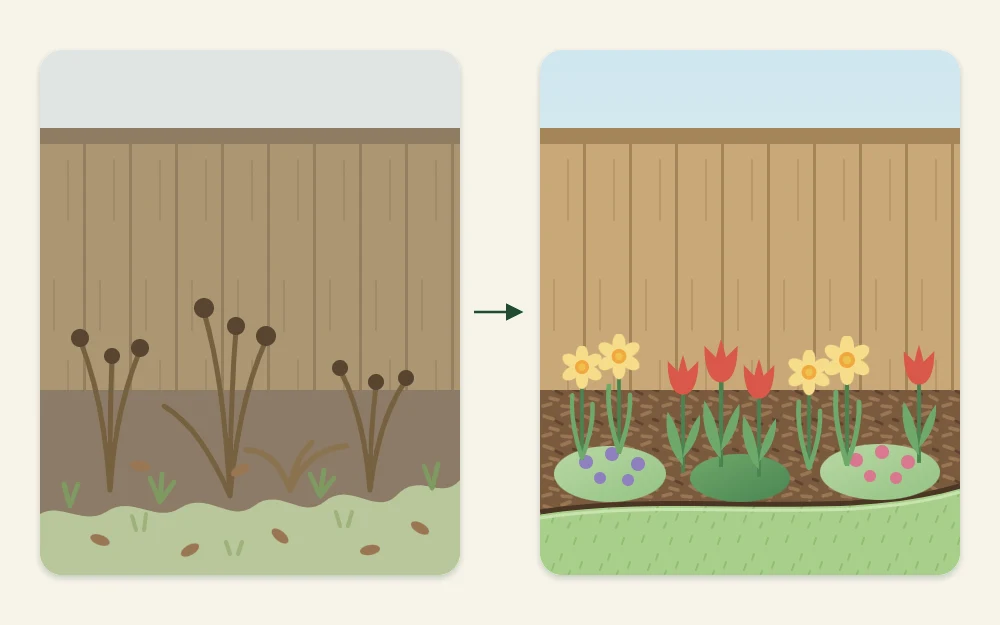
Rake out fallen leaves and debris from beds, corners and behind pots. Cut down the old stems of perennials and ornamental grasses that were left standing over winter, taking care not to snip the new shoots coming up at the base. Leave spring-flowering shrubs alone for now, because cutting them before they bloom removes this year’s flowers.
The aim at this stage is a clean background. Fresh growth and spring flowers look brighter against bare, tidy soil than they do poking through last year’s stems.
Step 3: Sharpen the edges, clean the hardscape and mulch
Nothing lifts a small garden faster than crisp lines. Recut the edge where lawn meets bed with a half-moon edger or a flat spade, and pull back soil or gravel that has crept over edging strips. A clear edge tells the eye the garden is cared for, even before anything is in flower.
Then sweep the paving and wash off the winter film with a stiff brush and water. Clean hardscape reflects more light and makes the whole space look larger and brighter.
Top up mulch and gravel
A fresh layer of mulch over cleared beds gives one even color between the plants, which reads as calm and finished. Keep it a little away from stems and crowns. Top up thin patches of gravel the same way, using the same material as before so the surface stays uniform. Do this after edging, because a sharp edge holds the mulch in the bed and the gravel on the path.
Step 4: Regroup pots and add spring color
Gather every pot, wipe the outsides and put back only the best ones, arranged in a few tight groups rather than scattered.
Now add color where it counts. A few pots of spring flowers bought already in bud or bloom, such as pansies, violas or primroses, placed by the door and beside the seat, give the garden a lift for little effort. Check that anything you plan to keep suits your hardiness zone. Keep to one or two colors and repeat them, because a small space filled with every color looks busy rather than bright.
Tip
Put spring color where you see it from indoors. On cool days you will enjoy a pot outside the kitchen window far more often than one at the back fence.
Step 5: Check supports and ties
Winter wind loosens things. Look over trellis panels, obelisks, canes and plant ties before new growth hides them. Retie climbers loosely with soft twine, replace ties that have cut into stems and take down any cane supports that have split. For anything attached to a wall or fence, follow the manufacturer’s instructions for upkeep, and check freestanding supports after wind.
Step 6: Add one new idea, not ten
With the garden clean you can see what it lacks. Choose a single improvement for the season and do it properly. It might be a new focal point, a trellis screen, a better path edge or one new bed. If a bed is your choice, the guide to planning a small flower bed walks through shape, edge and planting.
One idea is enough because every addition to a small garden changes the whole picture. Adding slowly lets you judge each change before you make the next.
Good to know
If your new idea means digging a new bed or setting posts, call 811 first to have buried utilities marked.
Planting for spring interest in little space
Three kinds of plant give the most spring display for the ground they take up:
- Bulbs. Daffodils, tulips and crocus are planted the previous fall, so make a note now of the gaps you would like filled and order in late summer. They come up through other plants and take no extra room. For this year, pots of bulbs sold in bud do the same job.
- Early perennials. Low plants that flower before the main border wakes up fill the front edge at the time it looks emptiest.
- Blossom on a small tree. A single flowering tree, such as a crabapple, serviceberry or redbud where it suits your zone, lifts the display to eye level and above without using bed space.
Spring is only one quarter of the year. To check that the same border has something to offer in every season, work through the plan for year-round interest in a small garden.
Frequently asked questions
When should I start tidying a small garden in spring?
Start once the ground is no longer frozen or waterlogged, and use your local average last-frost date rather than a calendar date as your guide. Clearing, edging and cleaning can happen early. Hold back tender plants until the risk of frost has passed where you live.
What is the quickest way to make a small garden look better in spring?
Sharpen the bed edges and clean the paving. Crisp lines and bright hard surfaces make a small space look cared for even before anything flowers. After that, a couple of pots of spring flowers placed near the door and the seat add color exactly where you notice it.
Can I still get spring bulbs if I did not plant any last fall?
Yes. Garden centers sell pots of bulbs already in bud in early spring, and these can be grouped by the door or set into gaps in a border for the season. For next year, note where you would like more color and plant dry bulbs in the fall.