Small Garden Lighting Ideas for Evening Atmosphere
Light a small garden with a few well-placed sources instead of one floodlight: uplight a tree, graze a wall, mark the path low down and give the seat a warm glow, using solar or plug-in low-voltage kits.
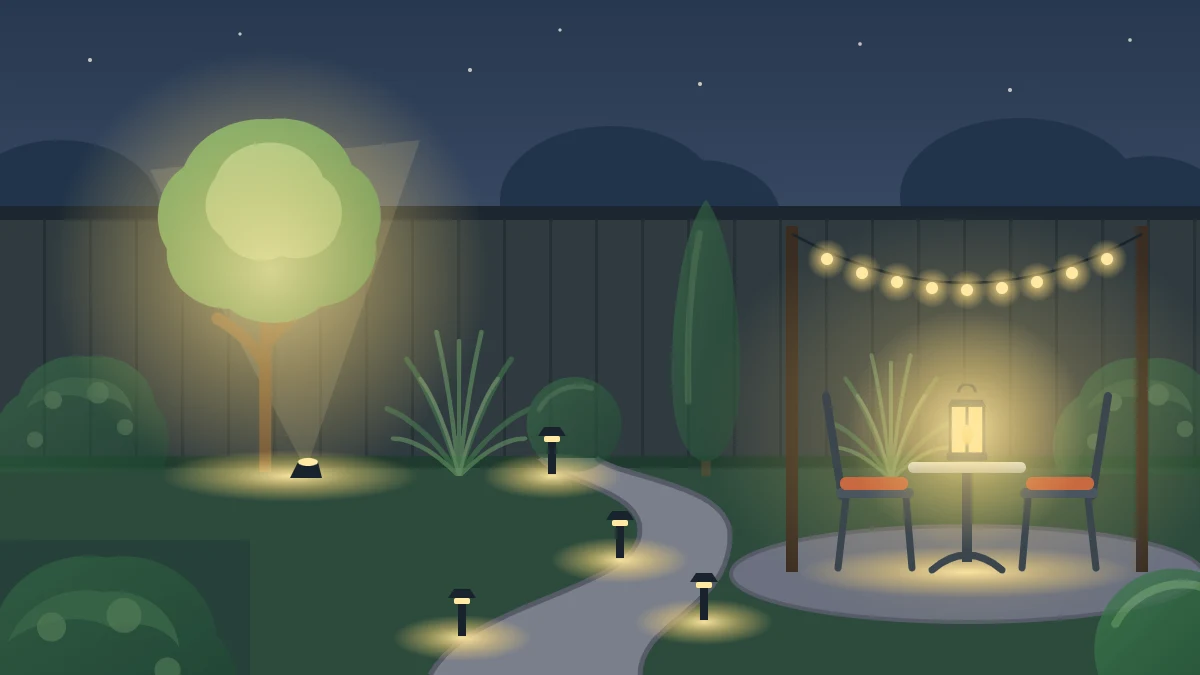
For much of the year, the hours you are home are the hours it is dark. Without lighting, a small garden becomes a black rectangle behind the glass, and the room indoors ends at the window. A few well-placed lights give you the garden back, as a place to sit and as a view.
The small garden lighting ideas here treat light as a design material. The principle running through all of them is simple: light a few things well and leave the rest dark, because in a small space the darkness is what gives the lit parts their effect.
Light a few things, not everything
A single bright floodlight flattens a garden. It shows every boundary at once, so the space looks exactly as small as it is, and the glare makes it hard to see anything beyond the beam.
Several small, dim lights do the opposite. Pools of light with shadow between them hide the boundaries and suggest that the garden carries on into the dark. Aim for three or four lit moments in a small yard: something to look at, the route, and the place you sit.
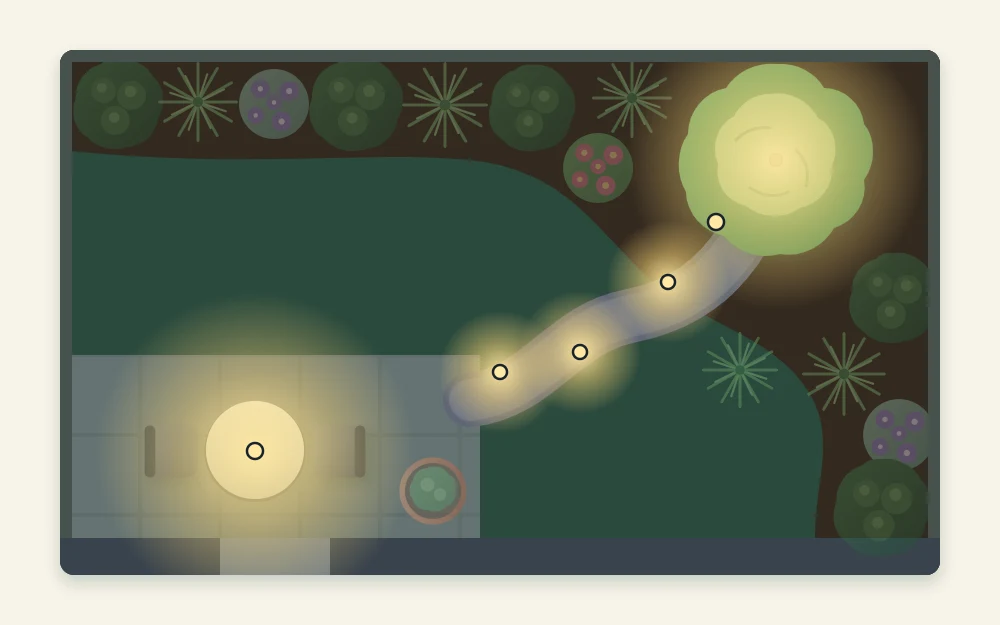
Six techniques that suit a small space
Uplight one tree or specimen plant
A low spotlight at the base of a small tree, aimed up into the branches, turns it into a sculpture at night. Choose the one plant with the best structure. This is the natural partner to your main feature by day; if you have not chosen one yet, start with these focal point ideas for small gardens.
Graze a textured wall or fence
A light set close to the foot of a brick wall, a stone face or a slatted fence and aimed along the surface picks out every ridge. Grazing gives a plain boundary depth and adds light to the garden indirectly, by reflection, which is softer than a direct beam.
Mark path edges and steps low down
Route lighting belongs near the ground. Small lights at ankle to knee height wash across the paving and show the edge of a step without shining in your eyes. Space them so the pools just meet; a tight row of bright dots looks like a runway.
Give the seating area a warm glow
Where people sit, light should be low, warm and dim, coming from table height or from behind the seat. Light from below face level is flattering and keeps the sky visible. On a small patio, one or two sources are enough; the guide to tiny patio garden ideas shows how to keep the floor clear around them.
Add lanterns and candle-style LED lights
Portable lanterns on a table, on a step or tucked among pots are the easiest lighting of all, since nothing has to be installed and they move with you. Rechargeable and solar lanterns and candle-style LED lights give the flicker without a flame.
Run string lights overhead
A line or two of warm string lights above the seating area makes a ceiling, which helps a patio feel like a room. Run them between freestanding posts sold for the purpose. If you fasten them to a house wall or fence instead, follow the manufacturer’s instructions, and get the owner’s agreement for a shared or rented boundary. Check posts and lines after wind.

Which technique does which job
| Technique | Where it goes | Why it helps a small garden |
|---|---|---|
| Uplight | Base of a tree or feature | Creates one strong view from indoors |
| Grazing | Foot of a wall or fence | Adds depth to a flat boundary |
| Low path lights | Path edges and steps | Shows the route without glare |
| Lanterns and string lights | Seating area | Makes the patio feel like a room |
Choose kits made for outdoor use
Two kinds of lighting suit a do-it-yourself approach:
- Solar lights. Each has its own small panel, so there are no cables. They need a spot where the panel gets sun during the day, and their output is modest, which suits accent and path lighting.
- Plug-in low-voltage kits. A transformer plugs into an outdoor-rated socket and feeds a set of lights through a low-voltage cable. They are brighter and more consistent than solar. Set them up exactly as the manufacturer’s instructions describe.
In both cases, buy products labeled for outdoor use and keep cables away from places where you walk or plan to plant.
Good to know
Anything wired into household mains, including new outdoor sockets and permanently wired fittings, is a job for a licensed electrician. Do not adapt indoor lights or extension leads for the garden.
Keep it warm, shielded and aimed down
Color matters as much as position. Warm white light looks like firelight and flatters foliage, brick and timber. Cool white tends to look harsh and bluish outdoors, and makes a small garden feel like a parking area.
Shielding matters too. A fitting with a hood or a recessed lamp sends light where you want it and hides the bright source from view. Aim lights down or at a surface wherever you can, and keep uplights narrow and few. This reduces glare for you, light spill into neighbors’ windows and disturbance to moths, birds and other night wildlife.
Tip
Try before you commit. Take a flashlight outside at night and hold it where each light might go, while someone else looks from the window and from the seat.
Use timers and keep flames out of it
A timer or a dusk sensor means the lights come on without you and go off when you are in bed. Lights that run all night waste the effect and keep the garden lit for nobody.
Real candles are best kept off the list. Dry leaves, grasses and seedheads close to a flame are a fire risk, especially in late summer and fall, and LED versions give a similar glow without it.
Plan for the darker months
Lighting earns its place most in winter, when the garden is seen almost entirely from indoors and evenings start early. Bare branches, seedheads and evergreen shapes look their best under a single uplight, and a lit view makes the room inside feel bigger.
When you place your lights, check the view from the window you use most on winter evenings. The guide to keeping a small garden interesting in winter covers the plants and structure worth lighting.
Frequently asked questions
Are solar lights bright enough for a small garden?
For accents and for marking a path edge, often yes, provided the panel gets sun during the day. They are usually dimmer than plug-in low-voltage lights and fade through the night, so they suit atmosphere more than tasks. In a shaded yard, a plug-in low-voltage kit made for outdoor use is more dependable.
How many lights does a small garden need?
Fewer than most people expect. Start with one light on a feature, enough low lights to show the route and any steps, and one soft source where you sit. Live with that for a week before adding more. Darkness between the lit areas is part of the design.
Will garden lighting bother my neighbors or wildlife?
It can if it is bright, cool in color or aimed outward. Choose warm white, use shielded fittings that point down, keep uplights narrow and few, and put everything on a timer so the garden is dark for most of the night. Then look from the boundary to check for glare.

