Small Garden Pathways: Shapes, Widths and Materials
How to decide where a path belongs in a small garden, which shape makes the plot feel longer, how wide to make it and which surface suits the way you use it.

A path is the strongest line in a small garden. It tells you where to walk, and it also tells your eye where to travel, so it shapes how large or small the plot feels before a single plant goes in.
That makes small garden pathways a design decision as much as a practical one. The questions to settle are whether you need a path at all, what shape it should take, how wide to make it and what to build it from. This guide takes them in that order.
Decide whether you need a path at all
A path earns its space only if it follows a route people really take: from the door to the gate, to the bins, to a seat, to the tap. Watch where you walk for a week, or look for the worn line in the lawn. That line is your path.
In a very small plot the patio or lawn may already do the job, and a separate path would only cut the space into strips. If no regular route crosses the garden, a few stepping stones through a bed may be all you need. The broader arrangement of the plot comes first, so settle that with these layout plans for a small garden before fixing the path.
How the shape of a path changes the space
The shape matters because the eye follows the path faster than the feet do.

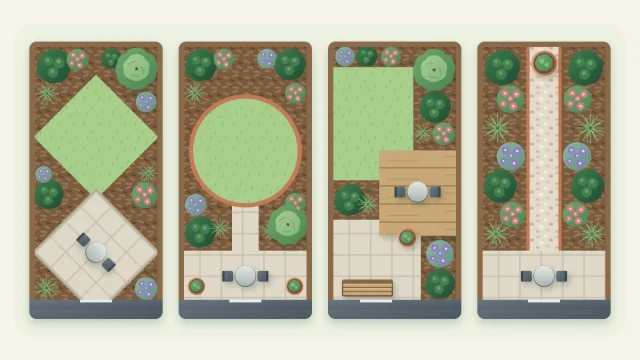
- Straight. A straight path from the door to the back fence shows the whole length at a glance, so the garden seems shorter. It suits a formal layout, or a short direct route you use many times a day.
- Diagonal. A path from one corner toward the opposite one follows the longest line the plot has. The walk is longer, and so is the view.
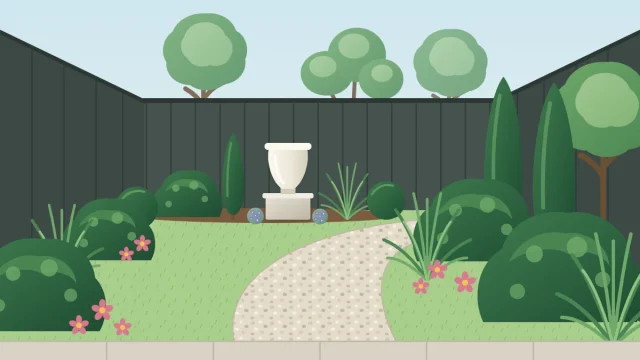
- Gently curved. A curve hides its own end behind planting, so you cannot see where it goes until you walk it. That sense of something beyond makes a plot feel deeper.
Keep curves generous. One broad sweep looks calm and is easy to walk. A series of tight wiggles looks restless, and people will cut across them. Give each bend a reason, such as a bed, a pot or a small tree to go around. In a long, thin plot, the way a path crosses from side to side matters most of all, and the article on designing a narrow garden covers it.
Rough widths to start from
Width depends on how the path is used. Treat these figures as starting points to test in your own space, not as standards.
- A main path for one person: about 3 ft (roughly 90 cm) feels comfortable for walking with a watering can or a wheelbarrow.
- A secondary stepping-stone route: stones of about 18 in (roughly 45 cm) across are enough for a route used now and then, such as access through a border.
Mark the width on the ground with string or two lengths of hose and walk it carrying whatever you usually carry. Plants will lean over the edges as they grow, so a path that looks generous when new will be narrower by midsummer.
Tip
A slightly wider path with fewer plants beside it often makes a small garden feel bigger than a thin path squeezed between full beds.
Choosing a material
The surface sets the mood and decides how much upkeep the path will ask of you.
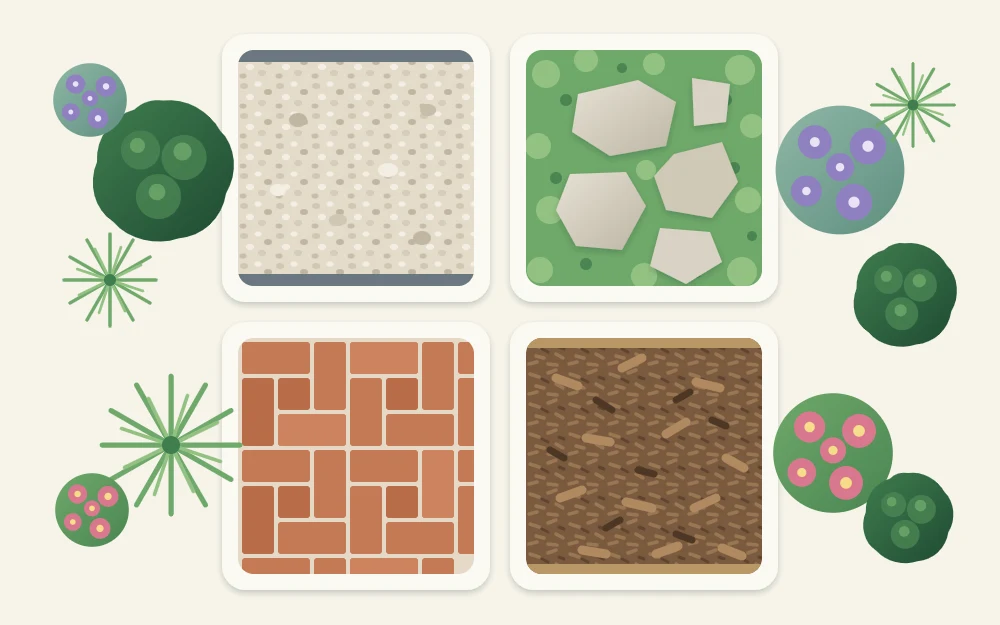
| Material | Look | Upkeep | Underfoot |
|---|---|---|---|
| Gravel | Soft, informal, pale | Raking, weeding, topping up | Crunchy, slightly loose |
| Stepping stones | Light, natural | Trimming plants around them | Firm, with gaps to step over |
| Pavers or brick | Neat, defined | Sweeping, weeding joints | Firm and even |
| Bark chips | Woodland, casual | Topping up as it breaks down | Soft, can be damp |
Firm, even surfaces are easier with a wheelbarrow or for anyone unsteady on their feet. Any surface can become slippery when wet or shaded, so look at how the area drains and how much sun it gets.
Whichever you choose, repeat a material you already have. A path in the same paving as the patio ties the garden together, where a third or fourth material makes a small plot look pieced together.
Four path ideas for small plots
Stepping stones through planting
Stones set among low plants take up almost no visual space, because the planting flows around and between them. You gain a route through a bed without dividing it. This works well for access you need only occasionally.
A path that widens into a seating pad
Let the path swell at one point into a round or square pad just large enough for a chair. The path then leads somewhere, and you gain a second place to sit without building a separate patio. Put the pad where the light is good at the time of day you would use it.
Edging that holds gravel in place
Loose gravel drifts into beds and lawn unless something contains it. A steel, brick or stone edge keeps the line crisp, and a crisp line is what makes an informal material look intended.
Paving bands across the plot
Laying pavers or brick so the joints run across the direction of travel slows the eye and makes a plot feel wider. Joints running along the path do the opposite and speed you toward the end.
Where the path meets the planting
A path looks best when planting softens at least one side. Low, mounding plants that spill a little over the edge blur the hard line and make the path look as if it has always been there. Keep taller plants back so they do not flop across the route after rain.
Because the path edge and the bed edge are the same line, plan them together. The tutorial on planning a small flower bed explains how to shape and edge the bed beside it.
Before you build
Most paths need the ground prepared so the surface stays level and drains. How much preparation depends on the material and your soil, so follow the supplier’s guidance for the product you buy, or have the path installed.
Good to know
Before any digging for a path base, call 811 to have buried utilities marked. It is a free service, and lines can sit closer to the surface than you expect.
Finally, lay the whole route out with string, hose or cardboard and use it for a few days before committing.
Frequently asked questions
How wide should a path be in a small garden?
It depends on use. As a starting point, about 3 ft suits a main route walked daily with a can or wheelbarrow, while a stepping-stone route used occasionally can be much slimmer. Mark the width with string and walk it before building, and allow for plants leaning over the edges.
Is a curved or straight path better for a small garden?
A gentle curve or a diagonal usually makes a small plot feel longer, because the view is extended and the end of the path is partly hidden. A straight path suits a formal layout or a short, direct route used many times a day. Avoid tight wiggles, which look fussy and get cut across.
What is the easiest path material to look after?
No surface looks after itself. Pavers and brick need sweeping and occasional weeding of joints, gravel needs raking and topping up, and bark breaks down and has to be replaced. Choose by how often the path is used and how firm a footing you need, then accept the upkeep that comes with it.