Vertical Garden Ideas for Small Spaces: Growing Up, Not Out
A design overview of ways to add planting height in a small yard, from freestanding trellis, obelisks and plant stands to arches and tall planters, with where each one fits.
When every bit of ground is spoken for, the space above it is usually still empty. Most vertical garden ideas for small spaces come down to one move: lifting plants off the ground plane so the same footprint carries more green, and so the garden has something to look at above knee height.
Height also changes how a small yard feels. A garden where everything is low reads as a floor with a fence around it. Add a few tall elements and the eye travels up as well as across, which makes the space seem larger than its outline. The ideas below start with things that simply stand on the ground, because those are the easiest to place, move and live with.
Climbers on freestanding supports
A climber is the most space-efficient plant there is: its roots need a small patch of soil and its leaves fill a surface taller than you are. Give it a support that stands in a bed or a large planter and no boundary is involved at all.
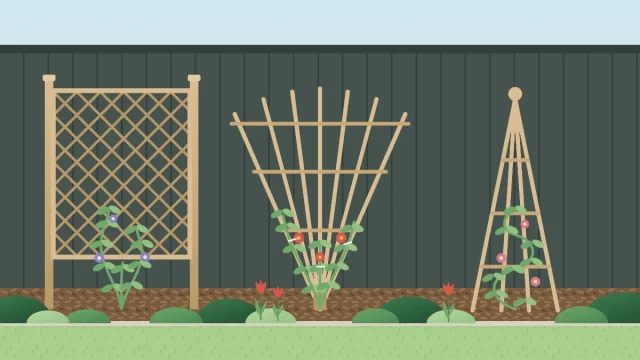
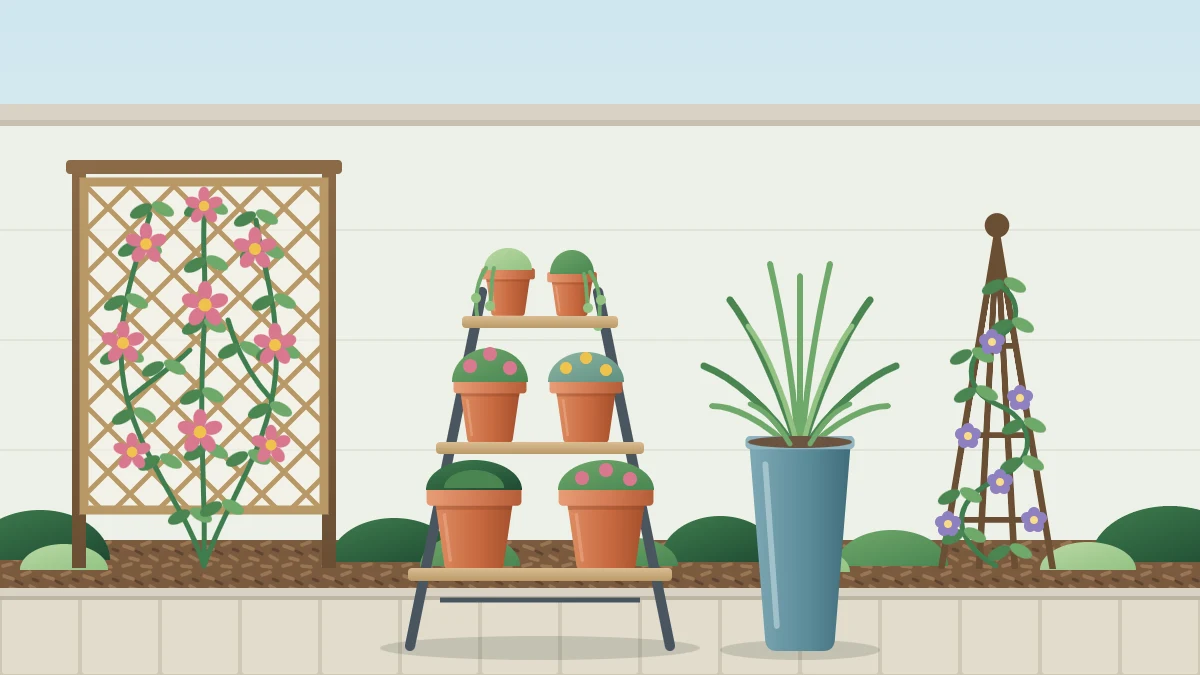
- Freestanding trellis panels on their own posts or in a planter box make a green backdrop wherever you need one.
- Obelisks give a vertical accent in the middle of a bed, where a flat panel would look odd.
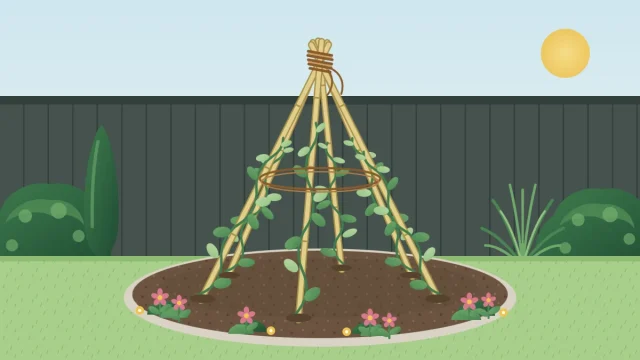
- Cane teepees are a seasonal option for annual climbers, put up in spring and taken down in fall.
Shape and position matter more than material, and both are covered in the guide to choosing a trellis shape and where to place it. The plant has to match the support too, so read about how different climbers hold on before you buy either.
Tiered plant stands and ladder shelves
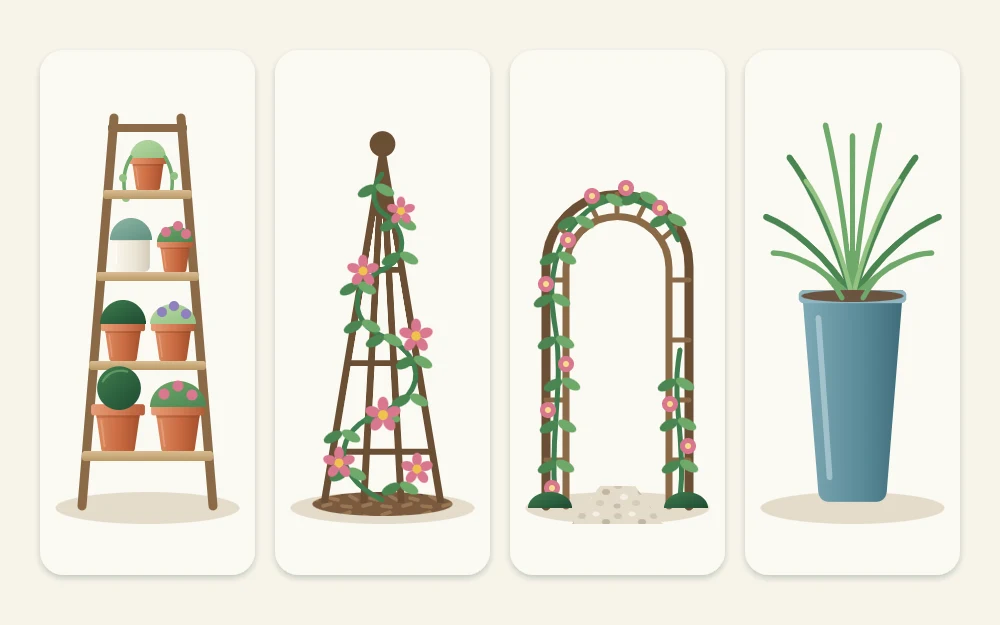
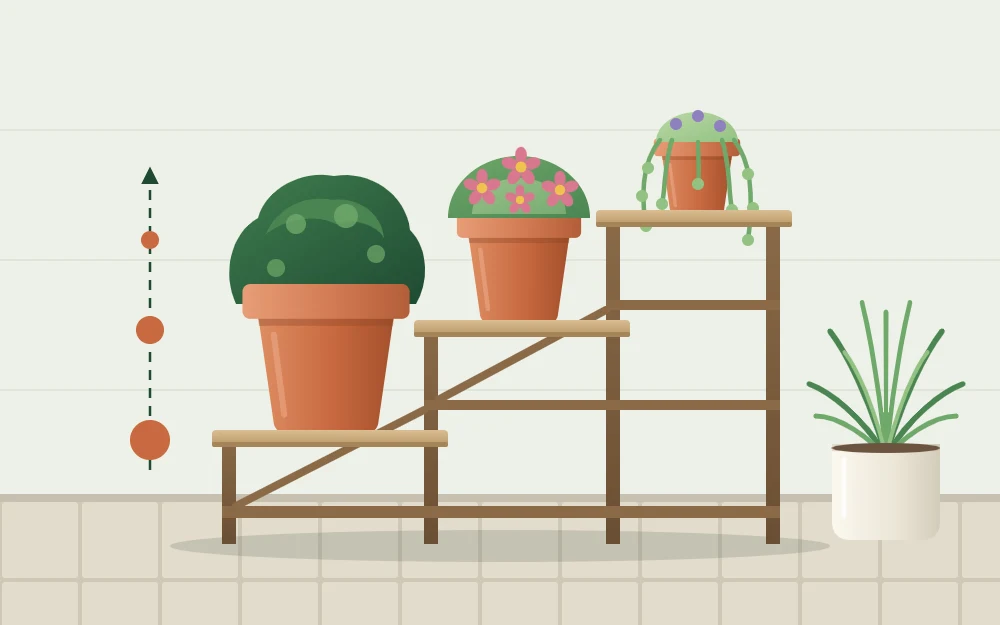
A tiered stand turns one square of paving into three or four levels of planting. It suits a patio edge or the dead space beside a door, and it works especially well for small pots that would look lost on the ground.
Arrange it with the largest, heaviest pots on the bottom step and the smallest at the top. That is partly common sense about stability, and partly design: a stand that gets lighter as it rises looks settled, and trailing plants on the top step can spill down over the ones below. Kitchen herbs are a natural fit for the upper steps, where they are easy to reach; the small herb garden ideas guide has layouts for them.
Good to know
Stand shelving and plant stands on a firm, level surface, follow the maker’s guidance on how to load them, and check them after wind. Move tall, light stands somewhere sheltered when rough weather is forecast.
Tall, narrow planters
A tall slim planter raises the plants in it to waist or chest height before they have grown at all. Planted with an upright grass or a clipped evergreen, it works like a living column.
Use them where you want a strong vertical line on hardscape: either side of a step, at the end of a path, or in a row along a paved boundary to form a low screen. Two or three matching planters in a line look deliberate; one of each kind looks like leftovers.
An arch over a path
An arch is the only vertical idea that puts planting overhead. It uses two small patches of soil either side of a path and carries a climber across the gap, so you walk through the planting instead of past it.
In a small garden an arch also divides the space. Passing under it marks a move from one zone to another, which makes a short plot feel like it has more than one part. Buy an arch as a kit and have it installed as its instructions describe, and keep it wide enough to walk through comfortably once the climber has filled out.
Trained plants as a long-term idea
Espalier is the practice of training a tree or shrub flat along a set of horizontal lines, so it grows as a pattern only a few inches deep. It gives blossom, leaves and winter outline in a space too narrow for an ordinary shrub.
Treat it as a slow project, not a quick fix. It takes several years of regular pruning to form, and it is easiest to start with a plant sold already trained on a frame. If that appeals, ask a local nursery which varieties suit your hardiness zone and the light you have.
Wall-mounted systems and pocket planters
Pocket planters, modular panels and wall-mounted pots are products to buy, and each comes with its own fitting method. Install them following the manufacturer’s instructions, on the kind of surface those instructions describe. If the wall or fence is shared or rented, get the owner’s agreement before you put anything on it.
From a design point of view, small pockets dry out quickly and need frequent attention, so place them where you pass every day and can reach every pocket without a ladder. A system you cannot water easily will not stay green for long.
Design points that apply to all of them
Check the light on the vertical surface
A fence can shade the very plants growing against it. Watch where the sun falls at different heights through the day: the top of a trellis may be in full sun while its base sits in shade. Choose plants for the light they will actually get.
Plan how you will water
Anything raised dries faster than the ground. Before placing a stand or tall planter, make sure a watering can or hose reaches it and that water draining through will not stain paving or drip onto a seat.
Repeat one idea
Five different vertical features in one small yard compete with each other. Pick one or two and repeat them: three matching obelisks along a bed, or a pair of tall planters. Repetition gives rhythm, and rhythm reads as design.
Use the corners
Corners are where two boundaries meet and floor space is least useful, so they are the natural home for the tallest element. A stand, obelisk or climber-covered trellis there draws the eye to the far end of the plot; see ideas for garden corners for more ways to use them.
Where to start
Stand in the doorway you use most and look for the blankest stretch of boundary or the emptiest piece of paving. Put one freestanding vertical element there, live with it for a season, then decide whether to repeat it.
Frequently asked questions
What is the easiest vertical garden idea for a beginner?
A freestanding support with one climber is the simplest start. An obelisk or a cane teepee stands in a bed or a large planter, needs no boundary and can be moved or removed later. Pair it with an annual climber for the first year so you can judge the position before committing to a permanent plant.
Can I create a vertical garden without attaching anything to my fence?
Yes. Trellis panels on their own posts or in planter boxes, obelisks, arches, tiered plant stands and tall narrow planters all stand on the ground. They are the better choice when the boundary is shared or rented, because nothing touches the fence and everything can go with you if you move.
Do vertical gardens work in shade?
They can, as long as the plants suit the light. Look at how much sun the vertical surface gets at different heights, since the top of a support is often brighter than its base. Choose shade-tolerant climbers and foliage plants, and check that each suits your hardiness zone.