Best Plants for Small Gardens: How to Choose
A selection method for small plots: check mature size, pick plants with more than one season of interest, favor narrow and compact shapes, and repeat a short palette.
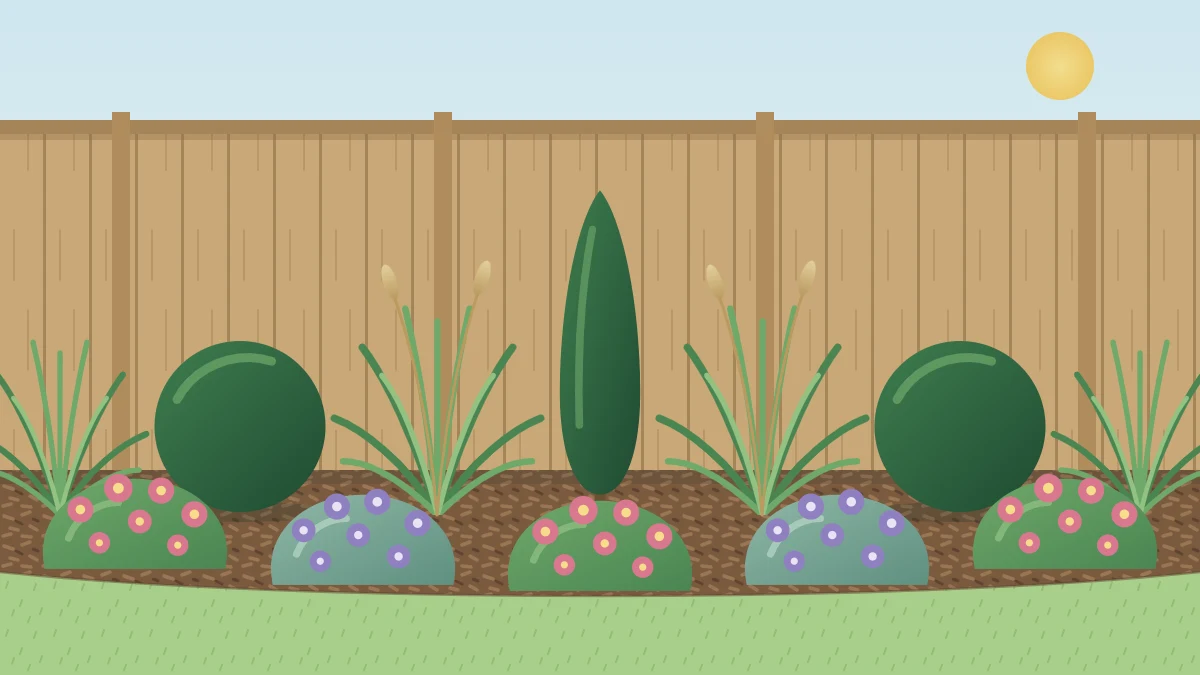
Standing in a garden center with room at home for perhaps a dozen plants, almost everything on the benches looks tempting. The best plants for small gardens are rarely the ones in fullest flower that day. They are the ones that stay in proportion, look good for months and do a clear job in the layout.
This is a method for choosing, not a shopping list. Climates across the US differ too much for one list to suit everyone, but the same handful of checks works anywhere and takes a minute per plant.
Check the mature size first
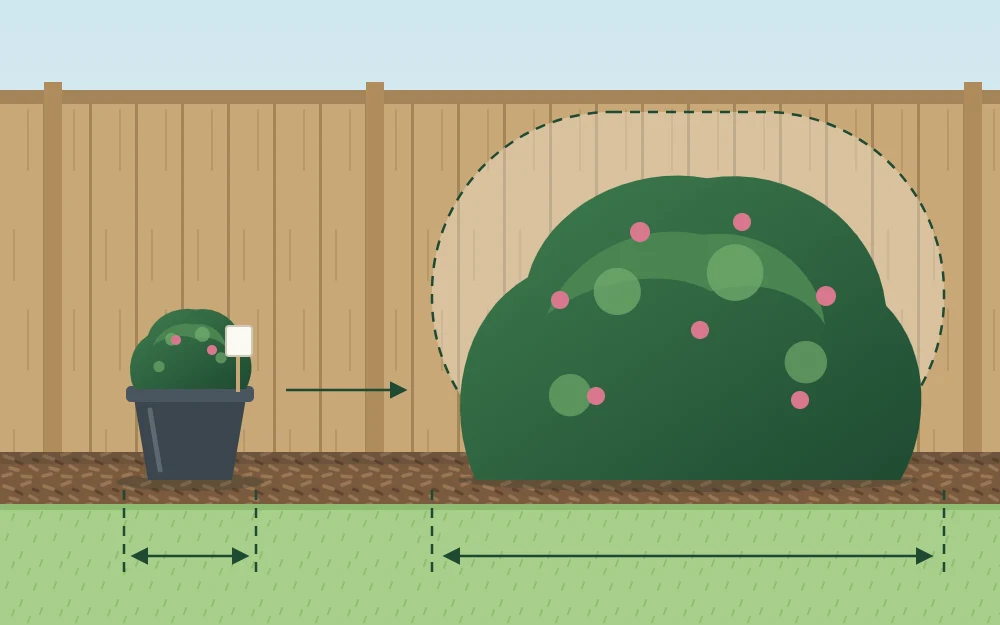
Before color, flowers or price, turn the label over and find the mature height and spread. A plant in a nursery pot is a fraction of its final size, and in a small bed a shrub that grows wider than expected will crowd its neighbors, cover the path and shade everything beside it.
Compare the mature spread with the space you actually have. If the bed is about 3 ft (roughly 90 cm) deep, a shrub that wants to be twice that wide will need cutting back every year, and it will never show its natural shape. Choosing a plant that fits is less work than fighting one that does not.
Tip
Take your bed measurements with you. Labels vary and growth depends on climate, so treat the figures as a guide and ask the nursery staff if a label gives no mature size.
Choose plants that earn their space
In a large garden a shrub can flower for two weeks and fade into the background for the remaining fifty. In a small one you look at every plant every day, so each should offer more than one season of interest.
Look for combinations: spring flowers followed by fall color, summer flowers followed by seed heads that stand through winter, or evergreen leaves with a neat shape all year. A plant that only has one good fortnight needs a strong reason to be included. The guide to year-round interest in a small garden shows how to check your choices against all four seasons.
Prefer narrow, upright and compact forms
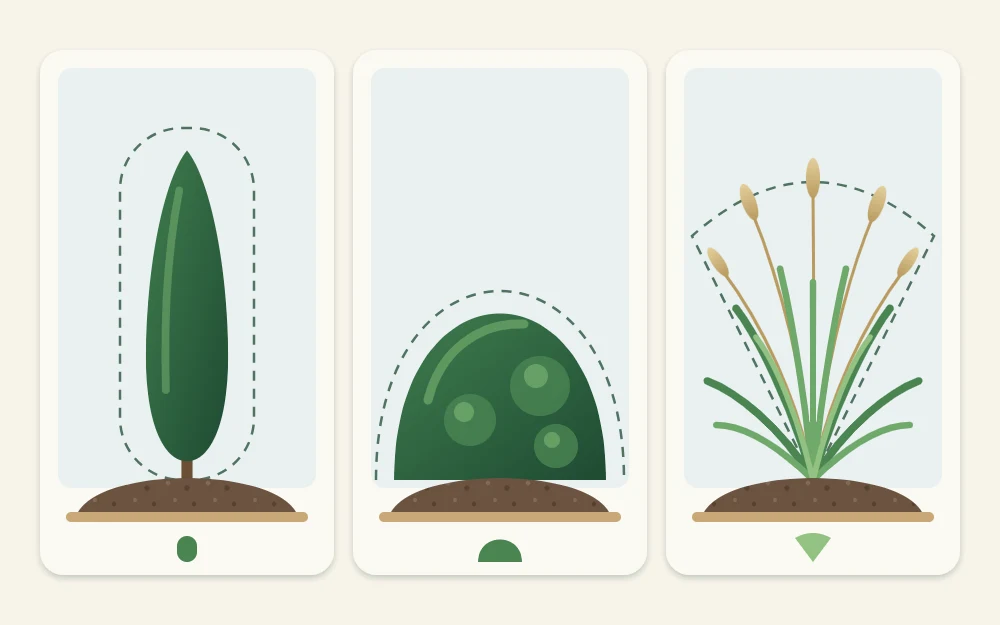
Shape matters as much as size. Three shapes are especially useful where ground is short:
- Narrow and upright: columns give height while using very little floor, so they add structure without filling the bed.
- Naturally compact: plants that grow as a neat dome keep their outline without constant clipping. Labels often use words such as dwarf or compact for these forms.
- Airy and see-through: grasses and tall, thin-stemmed perennials add height and movement while letting you see past them, so they do not block the view.
The same thinking applies above head height and on the boundaries. One tree chosen with care adds more than any other single plant, and the guide to small trees for small gardens sets out what to check. Where there is no floor to spare at all, a fence or trellis can carry the greenery instead; see the guide to climbing plants for small gardens.
Pick a short palette and repeat it
One of each is the habit that does most harm to a small garden. Many different plants, each appearing once, give the eye no pattern to follow, and the bed looks restless and smaller.
Choose a short list, roughly five to eight kinds of plant for a whole small garden, and use each several times. Repetition makes separate beds read as one planting. It also makes buying easier, because you are looking for three of something that works instead of three different things.
Mix structure, fillers and seasonal accents
A planting that holds together has three kinds of plant doing three jobs. Structure plants keep their shape all year and hold the design in winter. Fillers give the bulk of the foliage and flower from spring to fall. Seasonal accents are the brief highlights that come and go between them.
| Role | What it does | Widely grown examples |
|---|---|---|
| Structure | Evergreen shapes that hold the design all year | Boxwood, dwarf conifers, compact hollies |
| Fillers | Foliage and flowers that cover the ground through the growing season | Hardy geraniums, catmint, coral bells, ornamental grasses |
| Seasonal accents | Short bursts of color between the fillers | Daffodils, tulips and alliums; annuals such as cosmos or zinnias |
These are examples of each role, not recommendations for every yard. For each one, check that it suits your zone and is not invasive in your area. Some ornamental grasses and popular shrubs spread aggressively in certain regions, so look at state or local lists before buying; the National Invasive Species Information Center is a good place to begin.
As a rough starting proportion, let about a third of the planting be structure, most of what remains be fillers and a small share be accents. How to arrange them by height within the bed is covered in the guide on how to layer plants in a small garden border.
Match plants to your sun, soil and zone
A plant in the wrong conditions never looks good, and a small garden has nowhere to hide a struggling one. Before you shop, note three things about each bed:
- Sun: how many hours of direct sun it gets in summer. Labels usually say full sun, part shade or shade.
- Soil: whether it stays damp, dries out fast or sits somewhere in between, and whether it is heavy clay or light and sandy.
- Hardiness zone: the label gives a zone range. Find yours on the USDA Plant Hardiness Zone Map and buy only plants whose range includes it.
Then choose plants for the conditions you have. It is far easier than trying to change the conditions to suit a plant. If pets or small children use the garden, check whether a plant is a concern for them before buying it.
A quick check before you buy
With a plant in your hand, run through five questions:
- Will its mature height and spread fit the space?
- Does it look good in more than one season?
- Is its shape narrow, compact or see-through?
- Is it on your short palette, or does it replace something on it?
- Does it suit the bed’s sun and soil and your hardiness zone, and is it clear of local invasive lists?
A plant that passes all five deserves its place. One that fails on size or conditions is best left on the bench, however good it looks today.
Frequently asked questions
How many plants do I need for a small garden bed?
Work it out from the mature spread on each label, not from how the plants look in their pots. Divide the length and depth of the bed by the spread of each plant to see how many fit. New beds look sparse at first; annuals can fill the gaps while permanent plants grow.
Are evergreens a good choice for a small garden?
A share of evergreens is useful because they keep the design visible in winter, when other plants die back. Roughly a third of the planting is a common starting point. Choose compact or narrow forms, check the mature size on the label and confirm they suit your hardiness zone.
Should I avoid large-leaved plants in a small space?
No. One or two bold, large-leaved plants give a small garden contrast and a sense of scale, as long as their mature spread fits the bed. What tends to look fussy is using only small-leaved plants, because nothing stands out. Mix a few bold shapes with finer textures.


