Small Garden Privacy Ideas: Screening Without Shrinking
How to find the sight lines that matter and screen only those, using parasols, a small tree, tall planters and open screens, so a small yard feels private without feeling boxed in.
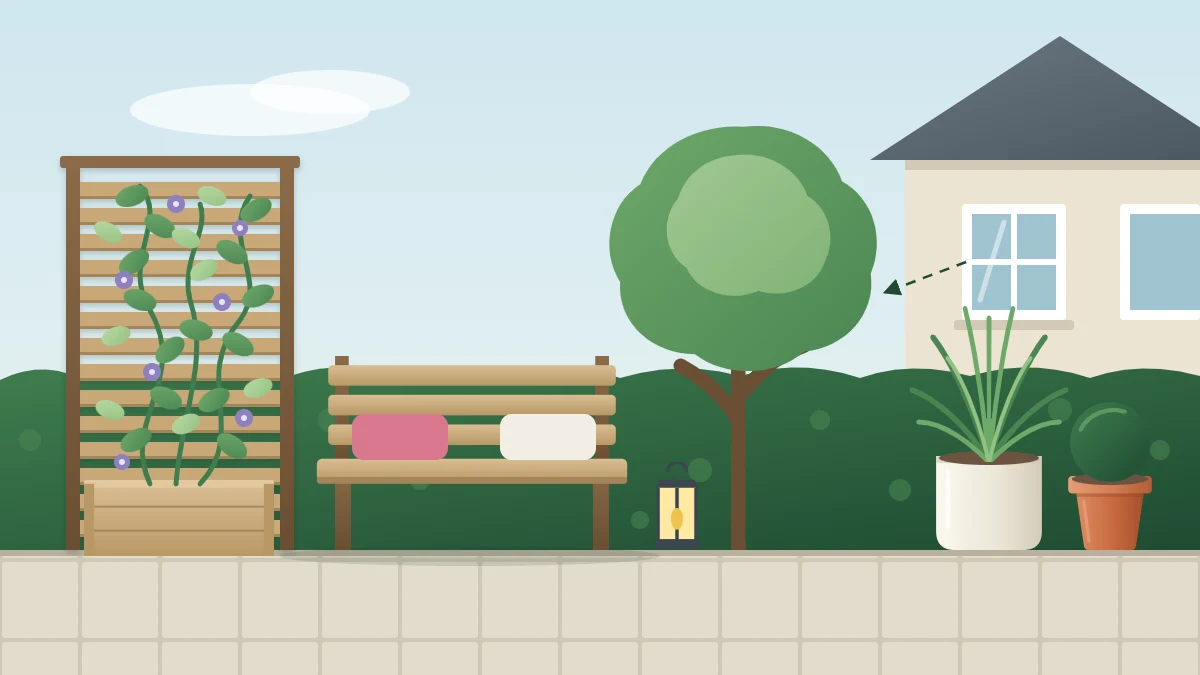
Being overlooked is one of the most common complaints about a small yard, and the usual reaction is to make every boundary taller. That often backfires. High solid walls on all sides shade the space, cut off the sky and make a small plot feel like a box.
The small garden privacy ideas here take a different route: find the exact line you are seen along, then block that line with the lightest thing that does the job. You end up with privacy where you sit and openness everywhere else.
Find the sight lines before you screen anything
Privacy is rarely needed across the whole garden. It is needed in one or two places, usually where you sit or eat, and from one or two directions.
- Sit in the seat you use most, at the height you actually sit.
- Look around and note each window, deck or path you can see. If you can see it, it can see you.
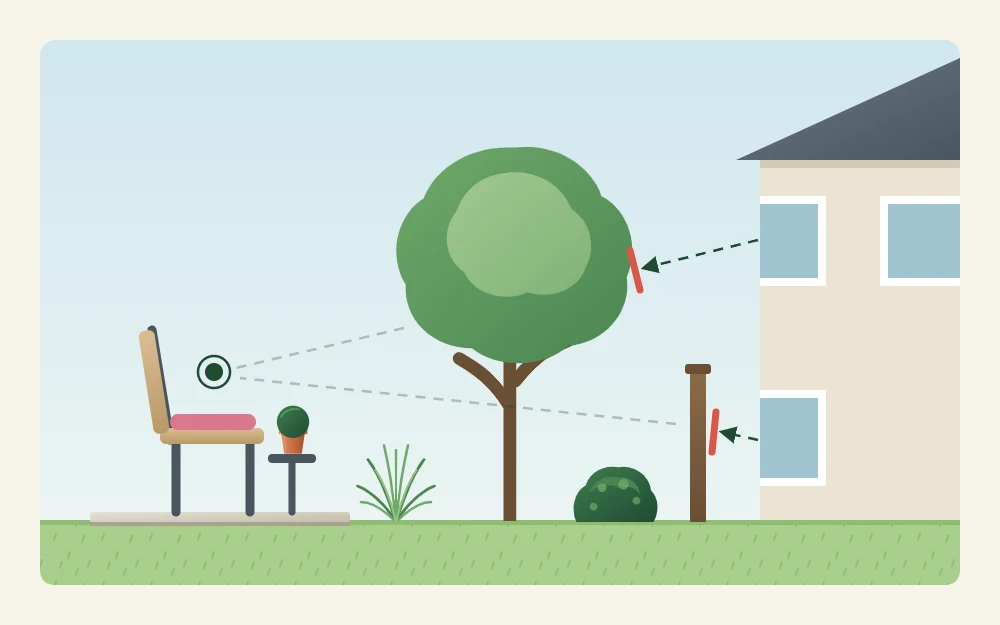
- Mark those sight lines on your plan as straight lines from the seat to each viewpoint.
- Have someone hold up a broom or a cane along each line while you stay seated. This shows how close to the seat a screen could stand, and roughly how tall it would need to be.
The reason this matters in a small space is simple geometry. A screen close to the seat blocks a wide angle of view for its size, so a modest panel or a single tree near you can do the work of a much taller barrier at the boundary.
Cover from above: parasols and bought covers
When the view comes from an upstairs window, a side screen does little, because the line passes over it. Cover overhead is what helps.
A freestanding parasol is the lightest option. It can be tilted toward the window, moved with the seat and folded away, so it takes nothing from the garden when you are not using it.
A pergola-style cover or a shade sail is a more permanent version. Treat these as kits to buy and have installed following the manufacturer’s instructions, and check local rules and any HOA covenants first, because structures are often regulated. Open rafters with a climber give dappled cover and keep the sky visible, which a solid roof does not.
A small tree in the sight line
One small tree with a light, airy canopy is often the best single answer to an overlooking window. The trunk takes almost no ground space, the canopy sits where the view is, and you look out underneath it into the rest of the garden. Multi-stem forms give a wider canopy at a lower height.
Position matters more than size. Use the cane test to find the point where a canopy would interrupt the line, and plant there rather than hard against the fence. The guide to choosing a small tree for a small garden covers what to check, including the mature height and spread on the label and whether the tree suits your hardiness zone.
A deciduous tree gives cover in the months you sit outside and lets light through in winter. Before you dig a planting hole, call 811, the call-before-you-dig service, to have buried utilities marked.
Tall planters as a movable screen
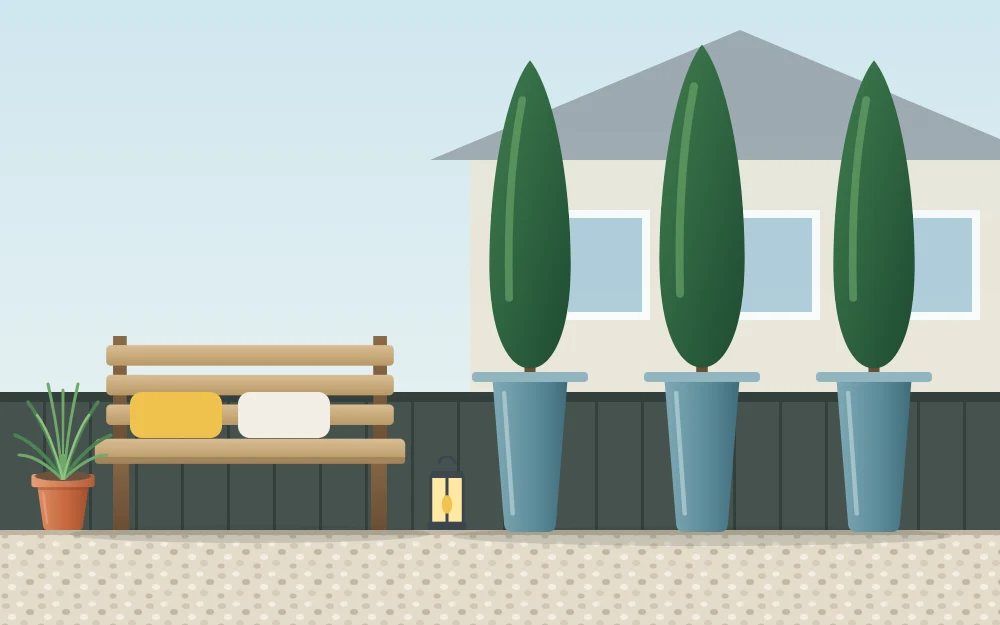
Tall grasses or narrow, upright evergreens in a row of matching planters make a soft screen exactly where you need it, including on paving where nothing can be planted in the ground. Because they stand on the ground, you can shift them a little until the line is blocked.
Grasses move and let light through. Evergreens hold the screen in winter. For shapes and arrangements, see these planter box ideas for small patios.
Open screens with climbers
A slatted or trellis screen with a climber on it hides more than its open pattern suggests. From the seat, your eye stops at the leaves. From farther away, the gaps blur. Light and air still pass through, so the space behind does not turn into a dark, damp strip.
A short screen set at a right angle to the boundary, close to the seat, often works better than a long one along the fence. It can also separate one area from another, which is a useful way to divide a small garden into zones. Freestanding screens and planter-with-trellis units avoid fixing anything to a boundary. For types and placement, see the trellis ideas for small gardens.
Good to know
Before you raise a fence or add a screen, check local rules and any HOA covenants, and confirm who owns the boundary. Panels attached to a wall or fence should be installed following the manufacturer’s instructions, with the owner’s agreement if the boundary is shared or rented. Check freestanding screens after wind.
Trained trees as a long-term idea
Pleached trees, which are trained into a flat panel of foliage on clear stems, and naturally column-shaped trees give height above a fence while leaving the ground below open. They are slow, need regular pruning to hold their shape and are usually bought ready-trained, so think of them as a plan for the coming years rather than this summer.
Why partial screening feels bigger
A tall solid fence gives the eye a hard stop at the edge of the plot, so you read exactly how small it is.
Layered screening works differently. A tree here, a panel there and a group of tall planters overlap from where you sit, so the view out is blocked, yet you still glimpse sky and depth between them. The boundary becomes hard to pin down, and a space with unclear edges feels larger.
| Option | Best against | Watch for |
|---|---|---|
| Parasol or bought cover | Views from above | Wind; local rules for structures |
| Small tree | Upper windows | Mature spread; takes years to fill out |
| Tall planters | Seated, ground-level views | Keeping routes clear |
| Open screen with climber | Side views near a seat | Boundary ownership; thinner in winter |
Talk to the neighbors
A short conversation before you add anything along a shared boundary avoids most disputes, and it sometimes solves the problem outright. Neighbors are often overlooked too and may welcome planting that screens both sides.
Tip
Try the cheapest idea first. Moving the seat a few feet, or turning it to face another way, can take you out of a sight line without adding anything at all.
Frequently asked questions
How can I get privacy in a small garden without a tall fence?
Screen the seat rather than the boundary. Sit down, find the direction you are seen from, and place something light in that line close to you: a parasol, a small tree, a row of tall planters or an open panel with a climber. Each blocks a wide angle because it stands near the seat.
How do I block the view from a neighbor's upstairs window?
Views from above pass over fences and side screens, so cover overhead works best. A tilted parasol is the simplest choice. A small tree with a light canopy placed in the sight line is a longer-term answer, and a bought pergola-style cover with a climber is another, subject to local rules.
Do I need permission to put up a privacy screen?
It depends on where you live and what you add. Check local rules and any HOA covenants before raising a fence or adding a screen or structure, confirm who owns the boundary, and get the owner's agreement if it is shared or rented. Talking to neighbors first is also wise.


