Trellis Ideas for Small Gardens: Shapes and Placement
How to choose a trellis by the job it does, from flat panels and fans to obelisks and arches, and where to place it so it suits both the layout and the climber.
A trellis is usually bought as a plant support and then found to be something more useful: a piece of garden structure. The best trellis ideas for small gardens treat it as a design tool that can screen, frame, divide or decorate, with the climber as the finish.
That means two decisions come before the plant. First, which shape of trellis does the job you need? Second, where should it stand so it helps the layout and suits the climber? This guide works through both.
Decide what the trellis is for
The same panel can do very different work depending on where it goes. Pick the job first and the type becomes much easier to choose.
- A green backdrop: a planted surface behind a bed or seat, so the view stops at leaves instead of bare boards.
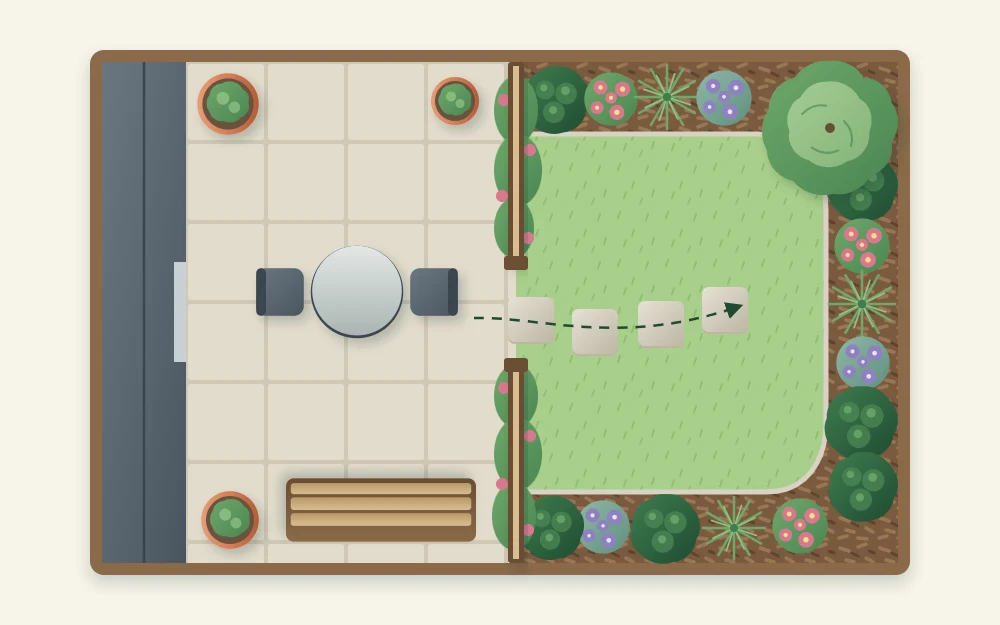
- A partial screen between zones: a short panel set partway across the garden, hiding part of the view so the space is not seen all at once.
- A frame for a seat: panels behind or beside a bench give it a sense of enclosure.
- A vertical accent: one tall shape rising out of low planting gives a bed a high point.
- Softening a blank boundary: breaking up a long run of fence with planted sections.
If screening from neighbors is the main aim, trellis is only one of several options; compare them in the guide to privacy ideas for small gardens.
Trellis types and where each fits
| Type | Shape | Best use in a small garden |
|---|---|---|
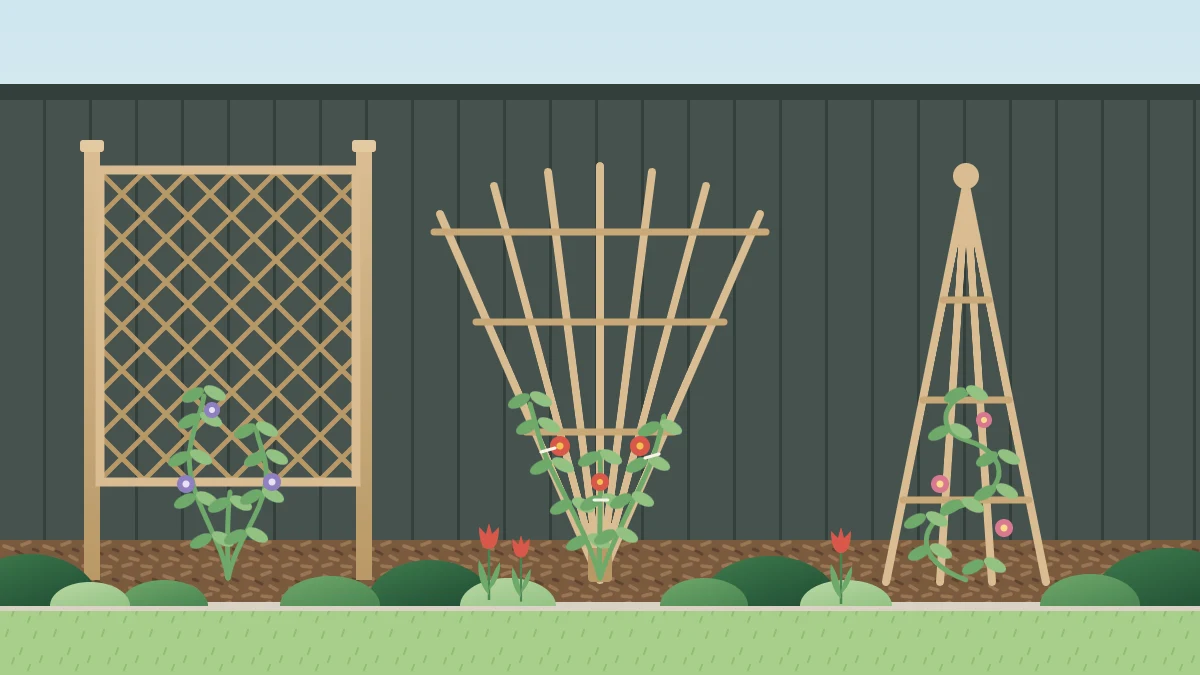
| Flat panel | Rectangular grid or lattice | Backdrops and screens |
| Fan trellis | Narrow at the base, wide at the top | One climber spreading from a single planting spot |
| Obelisk | Tall four-sided pyramid | A vertical accent in a bed or large planter |
| Arch | Two sides joined overhead | Marking a path or the move between zones |
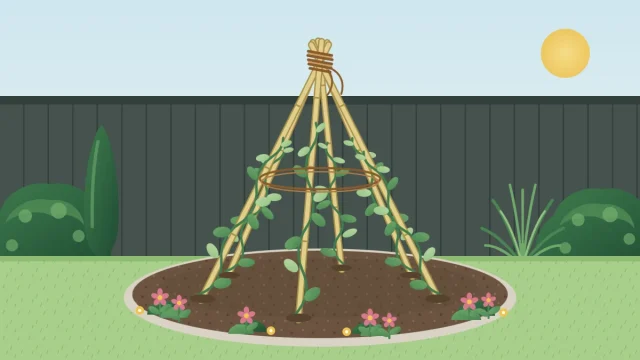
| Teepee | Canes tied at the top | A seasonal support for annual climbers |
| Expanding lattice | Diamond grid that stretches | Awkward widths and temporary cover |
| Wire-and-post system | Horizontal wires between posts | A light, almost invisible support for trained plants |
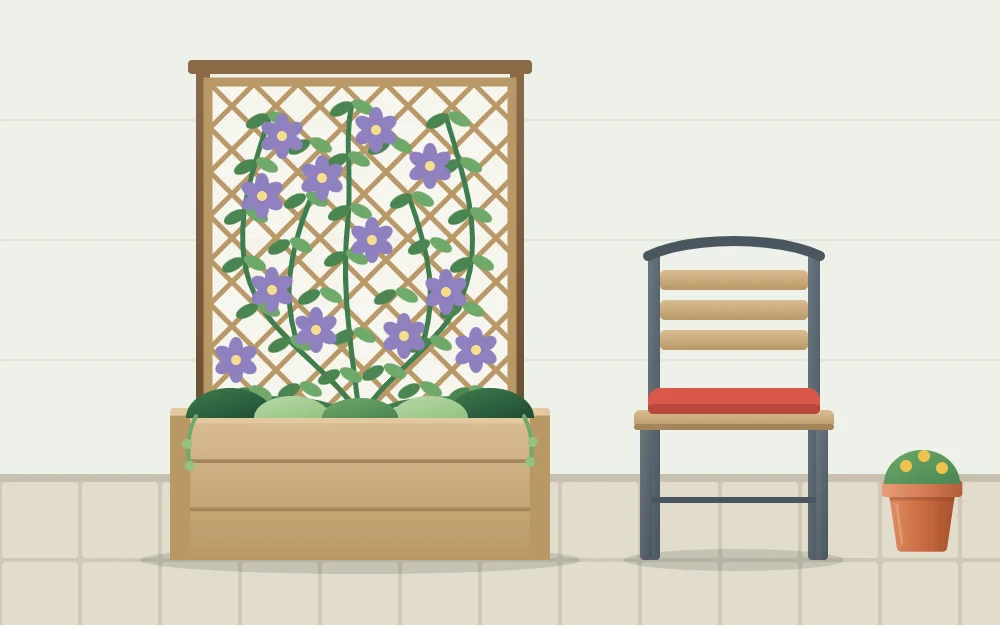
| Planter with trellis | Box with a panel at the back | Paved areas with no soil |
The teepee is the one type you can make yourself in an afternoon from canes and twine: see how to make a bamboo teepee trellis. The others are best bought as finished products or kits.
Freestanding or fixed to a boundary?
Freestanding types are the simplest choice. Obelisks, teepees, arches, planter-with-trellis units and panels on their own posts all stand on the ground, need nobody’s permission and can move when your layout changes.
Panels fixed to a wall or fence are a different matter. Install them following the manufacturer’s instructions, and if the boundary is shared or rented, get the owner’s agreement first. Confirm who owns the boundary before assuming it is yours to use.
Good to know
A trellis covered in leaves catches far more wind than a bare one. Check any trellis after windy weather, and before adding height to a boundary, check local rules and any HOA covenants.
Match the trellis to how the plant climbs
Climbers hold on in different ways, and a support that suits one will be useless to another. This is the most common reason a climber sits at the foot of a trellis and refuses to go up.
- Twiners wrap their stems around uprights. They do well on obelisks, teepees and vertical wires or canes.
- Tendril climbers grip with thin curling shoots and need something slim to hold: wire, netting, twine or fine lattice. Thick wooden slats are too wide for them.
- Scramblers, such as climbing roses, do not grip at all. They need a flat panel or horizontal wires that you tie the stems to.
For help picking the plant itself, including vigor and which vines to avoid, see choosing climbing plants by how they climb.
Placement: light, air and reach
Put the trellis where the climber gets the light it needs, not just where the trellis looks good. A screen on the shady side of a fence needs a shade-tolerant plant, or it will stay bare.
Leave a small gap behind a flat panel instead of setting it tight against a solid surface. As a rough starting point, a couple of inches (about 5 cm) lets air move behind the leaves and gives stems room to pass around the slats.
Think about reach as well. You will need to tie in, trim and tidy the plant, so keep the top within reach from the ground or a low step, and leave room to stand in front of it.
Scale and repetition
A trellis that is too small for its setting looks like an afterthought; one that is too big turns a small garden into a corridor. Judge by proportion: a screen that covers about a third to a half of the width it stands across usually hides enough while leaving the garden open.
Used partway across a plot, short panels do more than long ones. They interrupt the sight line, so part of the garden is hidden from the door and the space feels deeper.
Repeat one type instead of mixing several. Three matching obelisks along a border, or two identical panels either side of a seat, set up a rhythm that makes the whole garden look planned.
Tip
Before buying, stand a couple of canes with string between them where the trellis would go. Look at it from the house and from your seat to judge height and width.
Choosing a finish
A trellis is on show for months before the climber covers it, and all winter if the plant is deciduous. Dark colors recede and let the leaves stand out; pale or bright finishes make the trellis itself the feature. Pick one finish and match it to the fence or furniture so the structure reads as part of the garden.
Frequently asked questions
What type of trellis is best for a very small garden?
It depends on the job. For a vertical accent in a bed, an obelisk takes the least ground. For a screen on paving, a planter with a trellis panel at the back works without any soil. Both are freestanding, so they can be repositioned if the first spot turns out wrong.
Does a trellis need planning permission or approval?
Rules differ from place to place, so there is no single answer. Before adding a tall screen or anything that raises the height of a boundary, check local rules and any HOA covenants, and confirm who owns the fence or wall. Freestanding supports inside a bed are rarely a concern, but it is still worth checking.
How far from a fence should a trellis panel sit?
As a rough starting point, leave a gap of a couple of inches between a flat panel and any solid surface behind it. The gap lets air move through the leaves and gives stems room to pass behind the slats. If the panel is fixed to the fence, follow the manufacturer's instructions for spacing.